
Last updated November 17, 2026
 Architectural shingles
 Metal roofing
 Tile roofing
 GAF
 Owens Corning
 Flat & low-slope
Free roof inspection with deck photos before we talk money - GAF and Owens Corning certified installation
Roof Repair Maintenance Checklist for Winchester Homeowners
A Winchester roof won’t fail in February. It fails in September, two weeks after monsoon rains expose the cracked sealant and lifted flashing that eight months of 110°F heat cycles quietly created. Most maintenance checklists you’ll find online were written for four-season climates with snow load and freeze-thaw cycles. They tell you to clear ice dams and watch for frost heave. None of that applies here. What damages roofs in Winchester is thermal cycling and the two monsoon events bracketing the summer. This guide gives you a checklist built around those realities: what to inspect in June before the rains, what to check in October after they pass, how attic ventilation controls shingle aging, and what you can safely see from the ground versus what needs a contractor.
Quick Answer
Winchester homeowners should perform two main roof inspections per year – one in June before monsoon season and one in October after it ends – plus quarterly visual checks from the ground. The June inspection catches thermal expansion damage before rain can exploit it; the October inspection catches debris-blocked scuppers, ponding evidence, and sealant failures unique to flat desert roofs. Attic ventilation, shingle condition, and flashing integrity are the three areas that matter most in this climate.
Styles & brands we work with
- Architectural shingles
- Metal roofing
- Tile roofing
- GAF
- Owens Corning
- Flat & low-slope
Table of Contents
- Why Desert Roofs Need a Different Maintenance Checklist
- Pre-Monsoon Inspection Tasks (June)
- Post-Monsoon Inspection Tasks (October)
- How to Check Attic Ventilation Performance
- What You Can Safely Check from the Ground
- Material-Specific Maintenance: TPO, Asphalt Shingles, and Tile
- The Winchester Roof Maintenance Calendar
- Repair or Replace: How to Know Which You Need
Why Desert Roofs Need a Different Maintenance Checklist
The roofing advice most homeowners find online assumes your roof faces snow, ice, and freeze-thaw cycles. Winchester roofs face something different: month after month of extreme heat followed by sudden, intense rainfall. That combination creates a specific pattern of wear that generic checklists miss entirely.
Thermal cycling is the main culprit. Roof surfaces in Winchester can swing 50 to 70 degrees between afternoon peak heat and overnight lows. Materials expand in the heat and contract at night. Do that thousands of times over a season and you get what roofers call “thermal fatigue” – sealant cracks, fastener heads back out, flashing lifts slightly from the substrate, and shingle granules loosen faster than they would in a moderate climate. None of this is visible from your driveway in the middle of July. It becomes visible in September, when the first hard monsoon rain finds those hairline gaps and pushes water underneath.
Monsoon season in Winchester typically runs from late June through September. Rainfall arrives fast – sometimes an inch or more in under an hour – and flat roofs that haven’t been cleared of debris will pond. Ponding water is the enemy of every flat roof system. It finds seams, it works under membrane edges, and it accelerates deterioration at a rate that dry heat alone never would.
Winchester homes also span three distinct roof types: TPO flat roofs on newer construction, asphalt shingles on mid-century tract homes, and tile or foam on custom builds. Each material ages differently in desert heat and needs different maintenance. A checklist that treats all roofs the same will either miss critical tasks or send you climbing onto a surface you shouldn’t be on. That’s why we built this guide around what actually happens to Winchester roofs – not what happens to roofs in Ohio.
Pre-Monsoon Inspection Tasks (June)
The June inspection is your most important one. It’s your last clear window to catch thermal damage before rain turns small problems into interior leaks. Do this inspection in the morning, before surfaces get too hot to touch safely, and before the UV index climbs.
Here’s what to look for and check:
- Sealant and caulk lines around all penetrations. Check every vent pipe, skylight frame, and HVAC curb. Sealant that has dried, cracked, or pulled away from the substrate is the number one source of monsoon leaks in Winchester. Look for visible gaps, peeling edges, or a chalky texture where the sealant used to be flexible.
- Flashing at walls and roof transitions. Step flashing, counter-flashing, and headwall flashing all lift slightly as they expand and contract through summer heat. Run your hand along the base of walls and check for gaps, loose fasteners, or rust streaks that suggest water is already getting behind.
- Fastener heads and field nails. Backed-out nails are a desert roofing problem. Look for nail heads that sit proud of the shingle surface or have started to push up through sealant. Any fastener that has backed out is a future leak point.
- Granule loss on shingles. Check the gutters, valleys, and the base of downspouts for accumulated granules. Heavy granule loss means the shingle is nearing the end of its protective life, and June is the time to know that before summer stress accelerates it further.
- Drainage paths and scuppers on flat roofs. Clear every scupper, drain, and channel of debris. Check that the roof surface still slopes toward the drains – thermal movement can distort slope slightly over time. If water can’t find the drain, it will find the seam.
- Attic ventilation intake and exhaust. Check that soffit vents aren’t blocked by insulation and that ridge or static vents are unobstructed. Ventilation affects how fast shingles age – more on this below.
- Any previous repair sites. If you’ve had work done before, check those areas specifically. Repairs done with the wrong sealant or fastener for desert conditions tend to fail first.
If any of these checks turn up something you can’t clearly identify as minor, get it looked at before the rains start. The cost of an inspection and a small repair in June is far less than the cost of interior water damage in August. For a closer look at how we handle these repairs, see our roof repair service page.
Post-Monsoon Inspection Tasks (October)
The October inspection serves a different purpose: it catches what the monsoon season exposed. Rain and wind push water into places dry-season inspections never reach, and debris carried by runoff can block drainage in ways you won’t see until the next storm. This inspection is about finding the damage before it has all winter to sit and worsen.
Focus on these areas:
- Ponding evidence on flat roofs. Look for water stains, rings, or a darker discolored area on the membrane where water sat after the storm. Even if the surface is dry now, ponding leaves mineral deposits and a visible tide line. Any evidence of standing water more than 48 hours after a rain means the drainage or slope needs attention.
- Debris-blocked scuppers and drains. Monsoon runoff carries dust, leaves, and gravel into scuppers. What looked clear in June can be half-blocked by October. Clear every drain and check that the strainer is intact.
- Sealant failures around penetrations. Rain works at every existing gap. Check all the same sealant lines you checked in June and look for any new cracking, separation, or water staining around the penetration. A stain that wasn’t there in June means water got in.
- Interior ceiling and wall stains. This is the most important post-monsoon check. Look at ceilings near exterior walls, in closets, and in the garage. Any discoloration, bubbling paint, or soft drywall is a sign that water has found a path through the roof deck. It may not be dripping yet – but it will.
- Flashing and fascia at the roof edge. Wind-driven rain stresses the roof edge more than anything else. Check fascia boards for water stains, peeling paint, or soft spots. Check that drip edge flashing still sits flush and hasn’t pulled away.
- Attic moisture and ventilation after the wet season. Check for condensation stains on the underside of the roof deck, rust on any metal in the attic, or a musty smell. All indicate ventilation isn’t keeping up.
The October inspection is where most homeowners find out their June inspection missed something – or more often, where they find that a small issue they noticed in spring got worse. If you’d rather have a trained eye do this one, that’s exactly what our Roofer Winchester inspection service is for. Roof Inspections are a standalone service here, not a sales call disguised as a checkup. We’ll tell you roof repair or replacement – whichever one you actually need.
How to Check Attic Ventilation Performance
Attic ventilation is the most under-checked system in a desert home, and it directly controls how fast your shingles age. In Winchester’s climate, the stakes are higher than in a moderate climate. A shingle that faces 110°F air temperature on the outside while a poorly ventilated attic traps 150°F on the underside isn’t aging at the same rate as a properly vented roof. It’s aging faster – two or three times faster in extreme cases.
Here’s why: shingles age from the top down due to UV exposure, but they also age from the bottom up due to trapped heat. Asphalt shingles lose their volatile compounds more quickly at higher sustained temperatures. When the attic under the roof deck is too hot, the underside of the shingle bakes, and the shingle loses flexibility and granule adhesion faster. The same applies to the sheathing underneath, which can dry out and warp or, in some cases, crack.
To check whether your attic ventilation is doing its job:
- Measure temperature differential. On a hot afternoon, the attic air should be within 15 to 20 degrees of the outside air temperature if ventilation is working. If the attic is 30 degrees hotter than outside, ventilation is insufficient.
- Check intake vents. Soffit vents must be clear. Insulation blown in during a remodel or energy upgrade can block them. Look at each soffit panel from the exterior and inside the attic at the bottom of the roof slope.
- Check exhaust vents. Ridge vents, static vents, turbine vents, and power vents all need to be clear and functioning. A ridge vent covered by debris or painted over is no longer exhausting anything.
- Look for moisture signs. Rust on nails, condensation stains on the deck underside, and a musty smell all indicate ventilation isn’t keeping up – even during the dry season, condensation can form in a poorly vented attic from interior moisture.
- Check air sealing. Ventilation can’t fix air leaks from the conditioned space. Recessed lights, top plates, and HVAC chases that leak warm interior air into the attic make ventilation worse. Sealing these leaks is part of making ventilation work.
Ventilation works best as a balanced system: intake at the soffits, exhaust at the ridge or top of the roof. Adding exhaust without intake draws air from leaks rather than the soffits, which makes the problem worse. If you’re unsure, an inspection will tell you definitively whether your attic is breathing the way it should.
What You Can Safely Check from the Ground
Roof work in Winchester isn’t just about heat and sun – it’s about a trade that involves heights and steep surfaces. Knowing what you can safely inspect from the ground and what requires a professional is the difference between a maintenance habit and an injury. These are the checks you can do without a ladder.
Visible from the ground:
- Shingle granule accumulation in the yard, gutters, and at the base of downspouts after a rain
- Curling, cupping, or visibly lifted shingles at the roof edge and in valleys
- Sagging spots along the roofline or ridge that weren’t there before
- Interior ceiling and wall stains, bubbling paint, or discoloration around exterior walls
- Fascia boards showing water stains, peeling paint, or rot
- Drainage paths and scuppers on flat roofs – whether water flows freely or is visibly blocked
- Attic conditions through an interior access point (temperature, moisture, blocked soffit vents)
- Discoloration or water stains where roof meets wall, visible at the exterior corner
Requires a professional inspection:
- Any check that requires walking on the roof surface
- Flashing condition at wall junctions and complex valleys
- Shingle or membrane condition in the field of the roof, not just the edge
- Fastener integrity and backed-out nails across the field
- Sealant and penetration conditions on the field of the roof
- Underlying deck condition and sheathing integrity
- Any suspected issue that requires a hands-on assessment to confirm
The ground-level checks catch the obvious stuff and tell you when to call. Walking a roof in Winchester’s heat is more dangerous than it looks – surface temperatures can exceed what you can safely place a hand against, and a single misstep on a hot surface is a fall risk. Our technicians have up to 9 years of experience working on these surfaces; that’s the reason a professional inspection exists as a service.
And no, you don’t need to climb onto a flat roof to check the scupper. Binoculars from the ground catch a lot.
Material-Specific Maintenance: TPO, Asphalt Shingles, and Tile
Winchester homes use three primary roof materials, and each one fails differently in desert heat. A single generic checklist won’t get you there. Here’s what each material actually needs.
TPO Flat Roofs
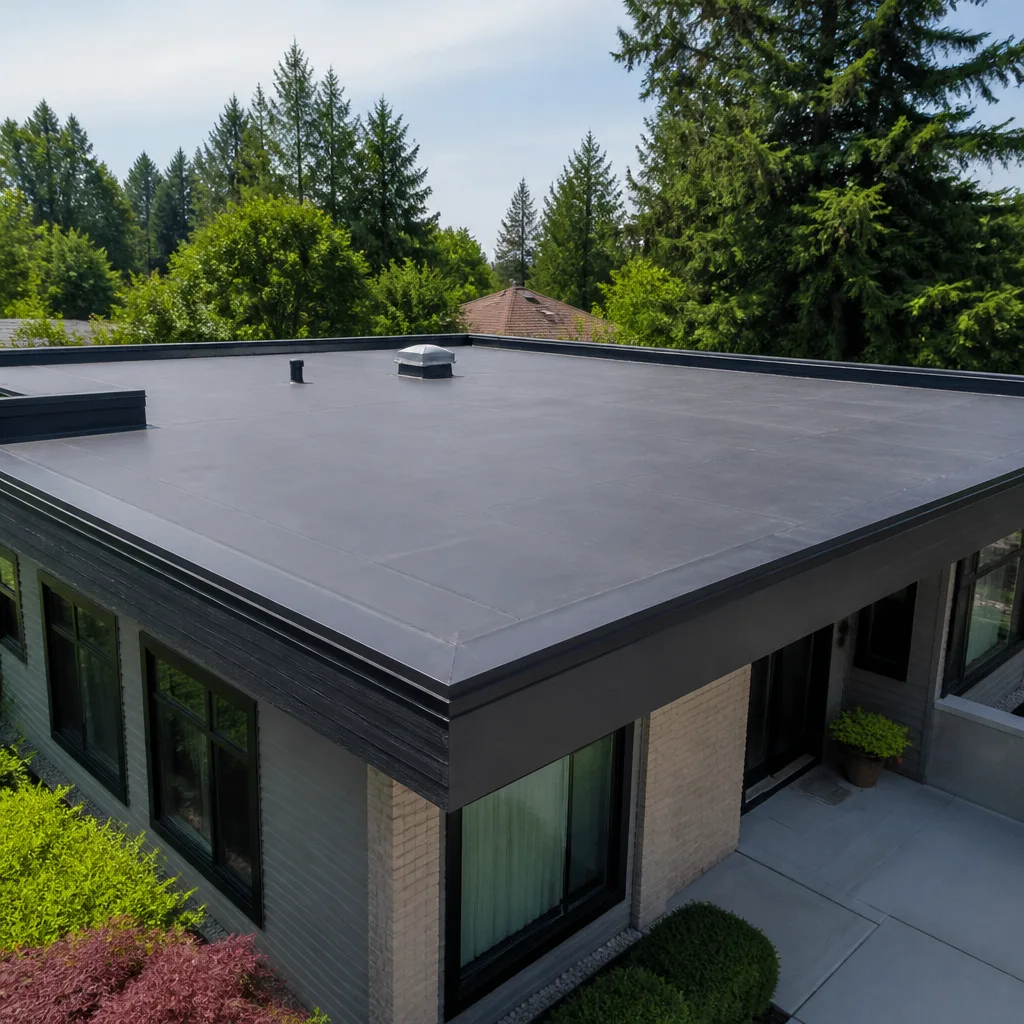
TPO membrane is a common flat-roof system on newer Winchester construction. It handles heat and UV well, but it’s not maintenance-free in this climate. The main issues are seam integrity, ponding, and penetration seals.
- Seams: The heat-welded or adhesive seams are the first place to look after the first hot summer. Check for lifting, curling, or separation at every seam edge. A seam that’s starting to lift is water’s entry point next rain.
- Ponding: TPO will pond if slope is insufficient or a drain is blocked. Ponding stresses seams and can cause the membrane to stretch. Any ponding evidence means you need to restore drainage and possibly add slope.
- Penetrations: Every pipe boot, vent, and HVAC curb penetrates the membrane through a seal. These seals crack from thermal cycling and are the most common leak source on a TPO roof.
- Pressure washing or aggressive cleaning: Don’t. TPO can be damaged by aggressive cleaning agents. A simple debris sweep is enough.
Asphalt Shingles
Asphalt is the most common residential roofing material in Winchester and the one most directly affected by attic ventilation speed-up. Maintenance for asphalt in this climate is about granule loss, sealant cracking, and thermal deterioration.
- Granule check: Loss is the visible measure of shingle life. Heavy loss in valleys and at the base of downspouts means age is accelerating. Roofs installed with GAF or Owens Corning products still age visibly faster in a hot attic than a well-vented one.
- Sealant strips: The adhesive strip that bonds each shingle to the one above it is vulnerable to desert heat. In extreme heat, the sealant can soften and fail – then winter wind lifts the shingle. Check the roof edge for any lift or flutter.
- Flashing and pipe boots: The seal around every pipe boot is the other weak point. Cracked or dried-out boot flashing is the most common asphalt shingle leak in Winchester.
- Class and age: Know your shingle’s rated wind and impact class. Materials from CertainTeed or IKO are rated differently, and that rating tells you how much deck is behind you as the shingles age.
Tile Roofs
Winchester has some tile and heavy-profile roofs, often on custom homes. Tile is durable but not unmaintainable. The failure points are underlayment and broken tile.
- Underlayment: The tile itself can last a long time in heat, but the underlayment beneath it degrades. Thermal cycling cracks the underlayment before the tile shows visible damage. That’s the reason an inspection matters on a tile roof, even when the surface looks fine.
- Broken and slipped tiles: Heat expansion can crack or dislodge tiles at edges and on complex roofs. Check for visible gaps or slipped tiles from the ground.
- Boral clay and tile products are among the more heat-stable options, but every tile is only as good as the underlayment and flashing beneath it.
If you want to know which product makes the most sense for your roof and your budget, that’s a conversation worth having – a brand-neutral recommendation matters here. Whether you’re considering GAF, Owens Corning, or a Boral tile product, the right answer depends on your roof structure and how much heat it actually sees, not on a preferred-vendor arrangement.
The Winchester Roof Maintenance Calendar
A year of roof maintenance in Winchester breaks down into four checkpoints. Put them in your calendar – the actual dates matter less than doing the check before and after the monsoon window.
- June: Pre-Monsoon Inspection. The critical pre-rain check. Sealant, flashing, fasteners, drainage, ventilation. This is when you catch thermal damage before water exploits it. Do it before the first forecast of monsoon moisture.
- July through September: Quarterly Visual Check. From the ground, after each significant rain. Look for new interior stains, granules in the runoff, and debris blocking drains. This is a 15-minute walk-around, not a full inspection.
- October: Post-Monsoon Inspection. The critical post-rain check. Ponding evidence, blocked scuppers, sealant failures, and any interior water signs. This is when you confirm what the season did – and schedule repairs before winter stress adds more.
- December or January: Cold-Weather Check. Winter in Winchester is milder than summer, but the thermal swing is still real on cold nights. Check that summer repairs held, that no fasteners backed out, and that attic ventilation is still performing. This is also a good time for the interior inspection of ceilings and attic while you’re already spending time indoors.
If you want the inspection done for you rather than doing it yourself, that’s what Winchester’s Winchester inspection and repair service is built around. Catch it before it costs more. A June inspection that finds one cracked pipe boot costs far less than a September interior repair.
Repair or Replace: How to Know Which You Need
The hardest question in roof maintenance is when a repair is the right call and when the roof is telling you it’s time for a replacement. A lot of contractors will push toward replacement when a repair would do. Here’s how we approach it, and how you can think about it yourself.
Repair is usually the right answer when:
- The roof is under roughly halfway through its expected service life and the issue is localized
- The damage is confined to one area – a failed pipe boot, a single lifted flashing, one damaged sealant line
- The shingle granule loss is moderate and consistent, not severe in isolated patches
- Attic ventilation is sound and the interior shows no structural moisture damage
- The issue arose from a specific event or penetration failure, not gradual aging across the field
Replacement is usually the right answer when:
- Granule loss is severe across the field, not just in one area
- Multiple leaks have appeared in different areas over a short period
- The shingles are brittle from long-term heat exposure and curl or crack when handled
- Underlayment or sheathing has failed from repeated water intrusion
- The roof has reached the end of its rated service life and repairs would only postpone replacement by a year or so
The honest answer is often “repair” when a homeowner walks in expecting replacement. That’s why we offer inspection, repair, and roof replacement as separate services – not a single sales funnel. Roofing only. Done right.
Common Mistakes to Avoid
- Using a four-season checklist in a desert climate. Ice dams, snow load, and frost heave don’t apply here. What matters is thermal cycling and monsoon drainage, and a checklist built around the wrong threats wastes your time and misses the real risk.
- Skipping the June inspection. The pre-monsoon inspection is the single most valuable maintenance action for a Winchester roof – and the one most often skipped. By the time you notice a leak in September, water has already worked its way into the structure.
- Assuming tile roofs need no maintenance. Tile looks durable from the curb, but the underlayment beneath it degrades in heat. A tile roof that has been neglected for a decade can be failing underneath while the tiles look fine.
- Walking the roof surface in summer heat. Roof surfaces in Winchester can get too hot to safely touch. The fall risk and heat exposure from a self-inspection outweigh the value of anything you’d catch up there that a ground check couldn’t reveal.
- Ignoring attic ventilation until the shingles fail. Ventilation is the silent variable that controls shingle aging. A poorly vented attic accelerates shingle deterioration by years, and fixing ventilation after the shingles are gone is more expensive than fixing it now.
- Hiring a generalist for a roofing-only job. A roofer who does gutters and windows and roofing on the side will have less depth on material and flashing detail. A roofing-only specialist knows how GAF, CertainTeed, and Owens Corning products actually perform in desert conditions.
- Accepting repair-vs-replace advice from someone with a brand incentive. A recommendation driven by a dealer incentive isn’t a recommendation, it’s an upsell. Ask for a brand-neutral assessment.
See the difference
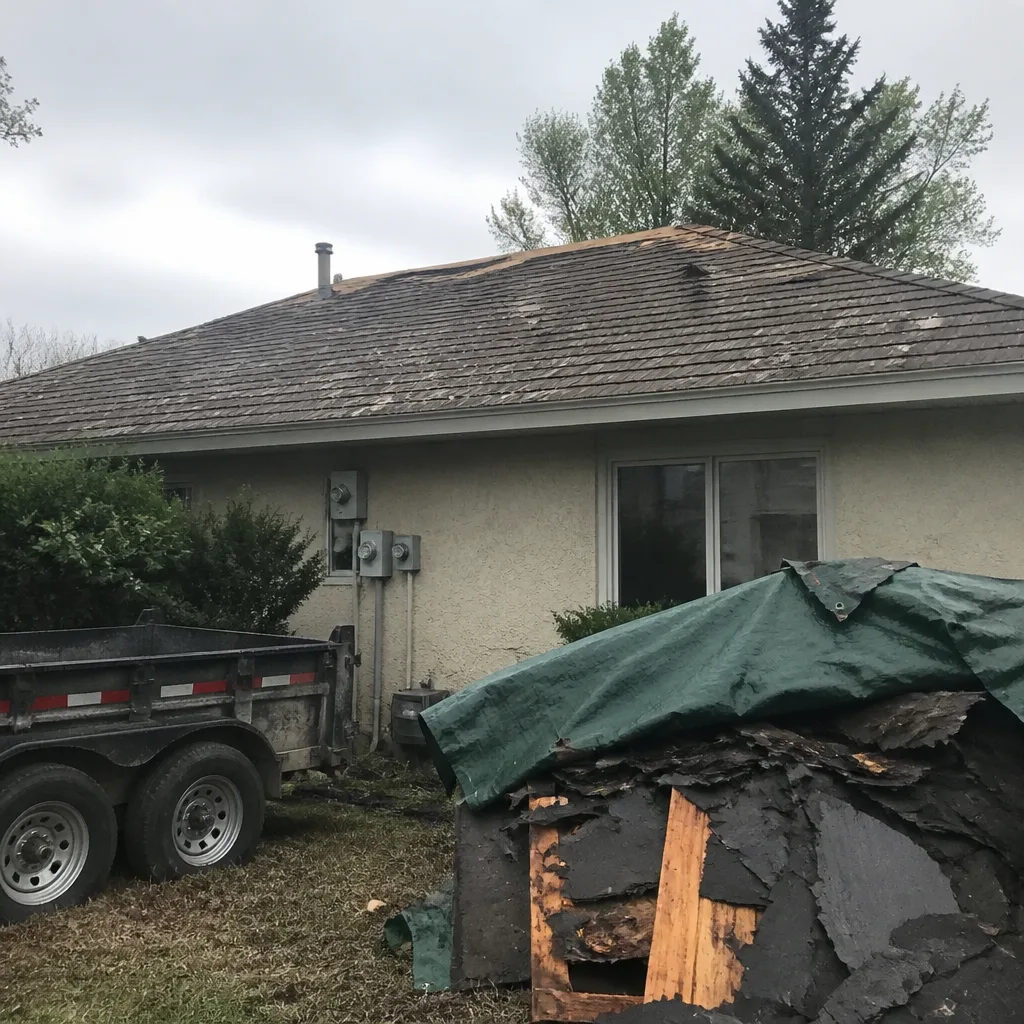 Before
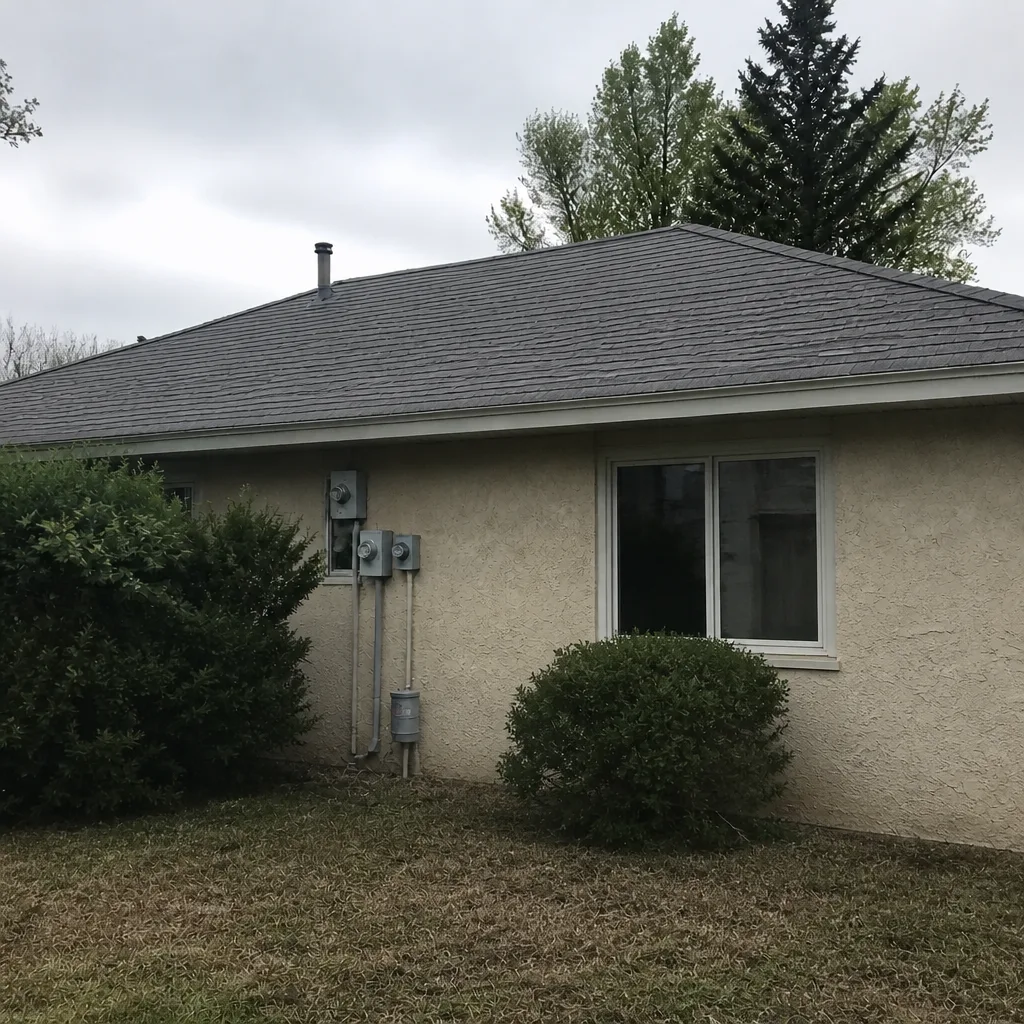 After
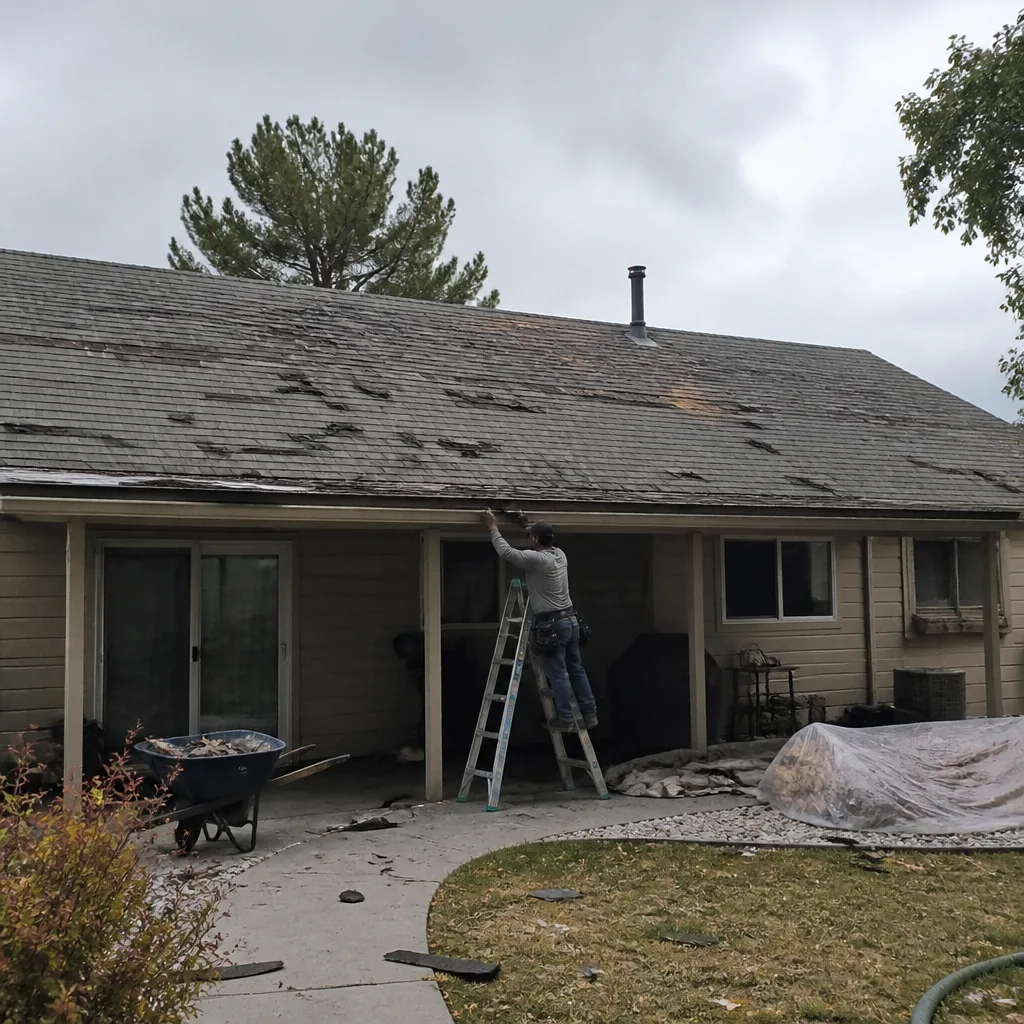 Before
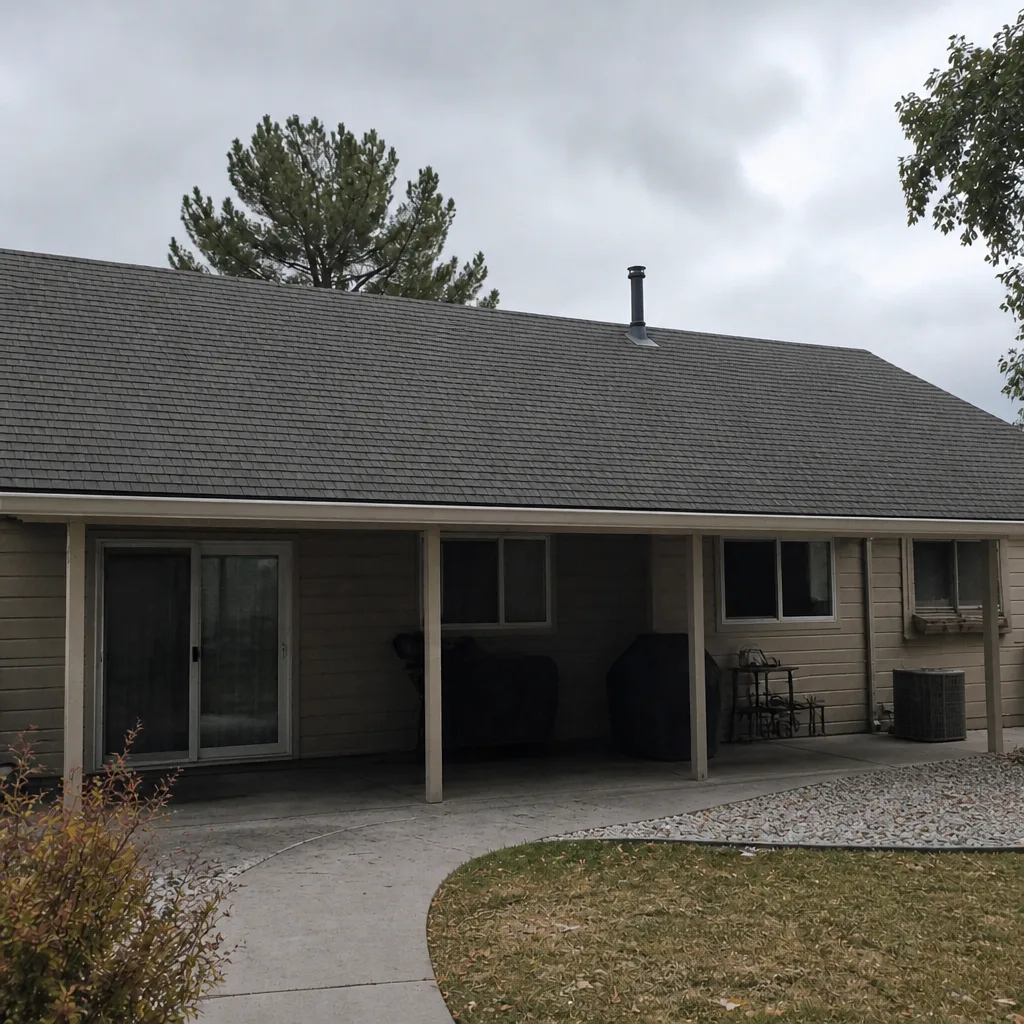 After
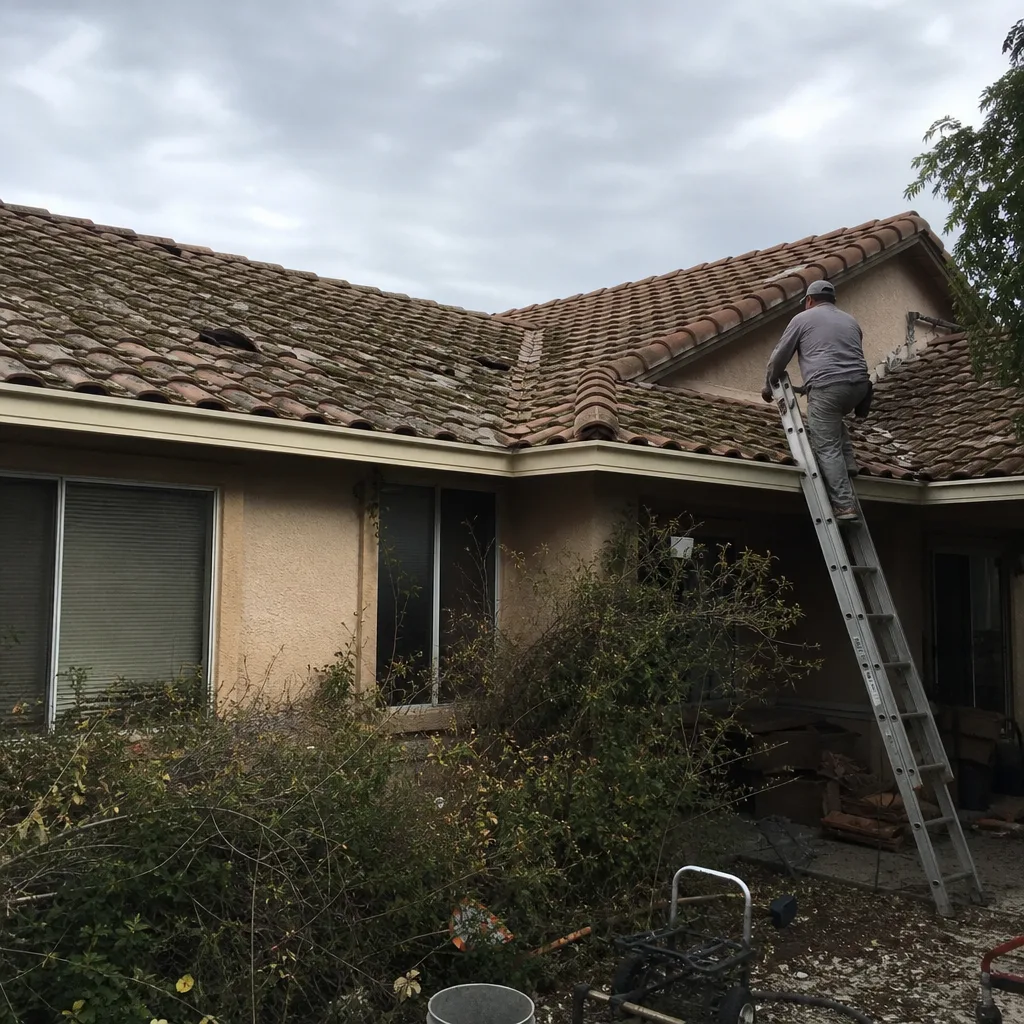 Before
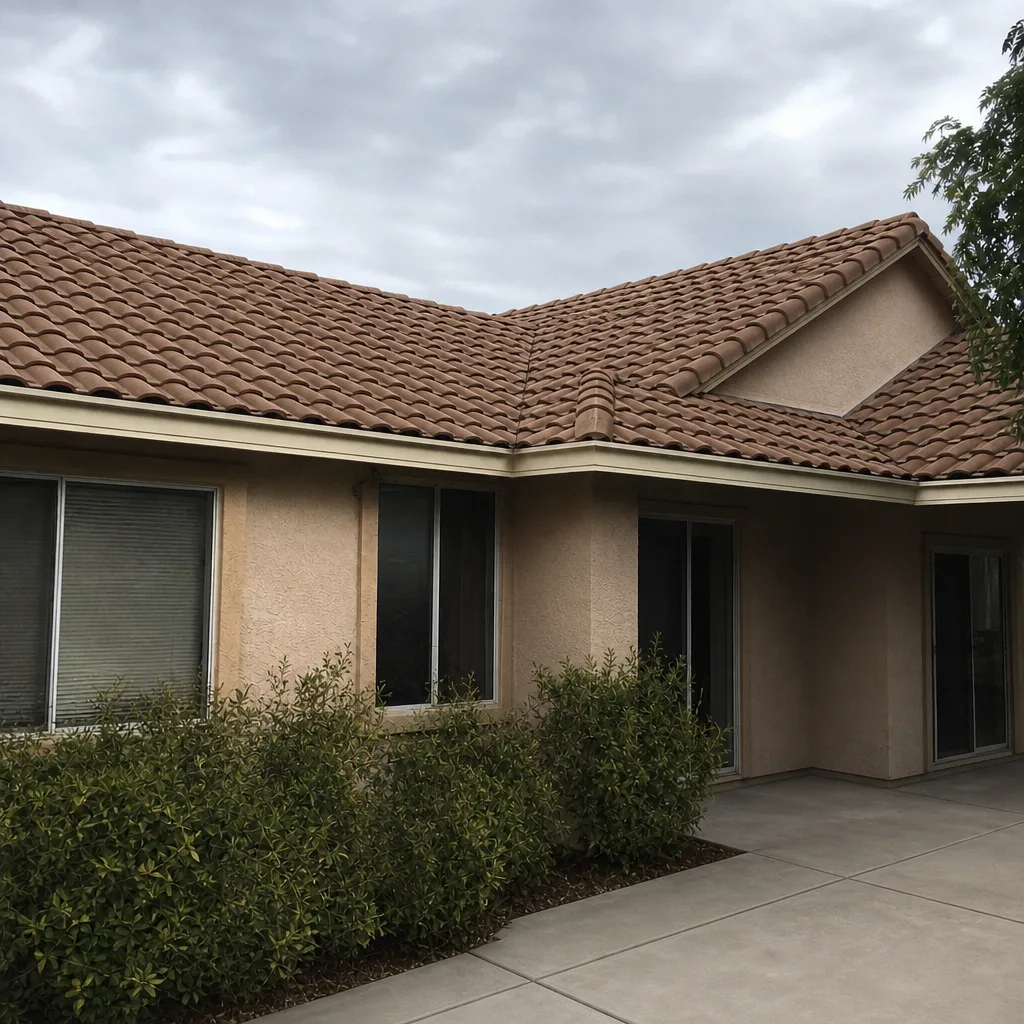 After
When to Call a Professional
Some roofing issues are clearly safe to diagnose from the ground. Others need a trained eye. Call a professional when you see any of these: water stains on interior ceilings or walls, especially near exterior walls or in closets; visibly lifted or missing shingles after a windy event; any sign of ponding on a flat roof (rings, stains, or water that sat more than 48 hours); sagging along the roofline or ridge; a sealant failure around a penetration you can’t confidently identify as minor; or any damage that would require walking on the roof to inspect. Also call if you simply want a full inspection rather than doing it yourself – inspecting a roof is not the same as doing a full inspection, and a trained roofer will catch things the ground check misses.
Roofer Winchester offers free estimates in Winchester – call (833) 390-2853. Our technicians have up to 9 years of experience, and Roof Inspection is a standalone service, not a sales call in disguise. We answer 24/7. Fast dispatch from 7am to 7pm, Sunday through Friday.
Frequently Asked Questions
Twice a year at minimum, with a June pre-monsoon inspection and an October post-monsoon inspection, plus quarterly visual checks from the ground. Desert thermal cycling and monsoon rains create two distinct seasonal threats, and a single annual check will miss one or the other. Call (833) 390-2853 to schedule an inspection if you’d rather have a trained eye do it.
Yes for the ground-level portion. You can safely check shingles from your yard, look for granules in gutters, inspect interior ceilings and attic spaces, and verify that drains and scuppers are visibly clear. Anything that requires walking on the roof – flashing, field shingles, fasteners, membrane seams – should be left to a professional. Roof surfaces in Winchester get hot enough to be dangerous even when the air temperature feels manageable.
A roof inspection in Winchester is typically free when performed by a roofer as part of a repair or replacement estimate. If you need an inspection on its own, the estimate you receive sets the final price – and we give free estimates. Call (833) 390-2853 for exact pricing. Estimates are free.
Not long, and it’s usually longer than you think and shorter than it actually is. A small leak in a Winchester roof during the dry season may not drip visibly – it can be evaporating in the attic or traveling along a rafter before it shows up as a stain weeks later. Once water is in the structure, damage grows fast in the heat. If you see any stain or suspect moisture, get it inspected rather than waiting. Call (833) 390-2853 for a free estimate.
Yes, and it matters more here than in a moderate climate. In Winchester’s summer heat, a poorly vented attic can run 30 degrees or more hotter than the outdoor air, accelerating shingle aging from the underside. Proper intake and exhaust ventilation can meaningfully extend shingle life. Checking that soffit vents are clear and exhaust vents are functioning is a key June task.
A repair is the right call when damage is localized and the roof has plenty of service life remaining. A replacement is the right call when granule loss is widespread, multiple leaks have appeared, or the underlayment or sheathing has failed. A brand-neutral roofer will tell you which one you actually need – not which one is more profitable. Call (833) 390-2853 for a free, honest assessment.
The Bottom Line
Roof maintenance in Winchester isn’t about four-season preparation – it’s about catching thermal damage before the monsoon finds it. The two inspections that matter most are your June pre-monsoon walkthrough, which checks sealant, flashing, fasteners, and drainage before the first hard rain, and your October post-monsoon check, which looks for ponding evidence, blocked scuppers, and interior water stains. Attic ventilation is the hidden variable that controls shingle aging, and it’s worth checking every time you’re up in the attic. Repair-versus-replace decisions should come from a brand-neutral roofer who knows how GAF, CertainTeed, Owens Corning, and other products actually perform in desert conditions – not from someone with a dealer incentive. Stay on the calendar, stay off the roof, and call a professional when something looks off.
Ready to get your Winchester roof inspected before the rains? Roofer Winchester offers three focused services – repair, replacement, and inspection – nothing else. Call (833) 390-2853 for a free estimate. We answer 24/7. Fast dispatch from 7am to 7pm, Sunday through Friday.
Written by the team at Roofer Winchester.