
Last updated November 17, 2026
 Architectural shingles
 Metal roofing
 Tile roofing
 GAF
 Owens Corning
 Flat & low-slope
Free roof inspection with deck photos before we talk money - GAF and Owens Corning certified installation
Roof Repair Troubleshooting in Winchester: Common Problems and How to Fix Them
A ceiling stain directly under a skylight is usually not a skylight problem. That’s the part that surprises homeowners most. Water that gets into a roof doesn’t drop straight down – it runs along the roof deck, follows framing, and shows up inside the house feet away from where it actually got in. In a place like Winchester, where the sun beats on the roof most of the year and the monsoon does the rest, that lateral travel is common and misreading it is how people end up paying twice for the same leak. This guide walks through the diagnostic logic we actually use: tracing water backward from the stain to the real entry point, the five failure points that account for most Winchester roof repairs, and how to tell a flashing problem from a shingle problem from a ventilation problem – because each one has a completely different fix.
Quick Answer
Most roof leaks in Winchester start at a penetration, a seam, or a flashing joint rather than in the middle of a shingle field, and the interior stain is often several feet from the actual entry point. The right troubleshooting sequence is to find the entry from the attic and roofline first, then match it to the failure type – flashing, shingle, or ventilation – before anyone quotes a repair. Matching the fix to the failure is what keeps a small repair small.
Styles & brands we work with
- Architectural shingles
- Metal roofing
- Tile roofing
- GAF
- Owens Corning
- Flat & low-slope
Table of Contents
- How Do You Trace a Leak Backward From the Stain?
- The Five Most Common Roof Failure Points in Winchester
- Flashing, Shingle, or Ventilation: How to Tell Which One You Have
- What Can Wait and What Needs Attention This Week in Winchester
- Reading the Attic: The Clues Most Homeowners Miss
- Red Flags in a “Quick Repair” Quote
- Repair or Replace? When Troubleshooting Turns Into That Conversation
- What You Can Check Yourself and What You Shouldn’t Touch
How Do You Trace a Leak Backward From the Stain?
You work from the inside out, against the water’s path. Water enters at the roof, runs down the top of the underlayment or along the deck, hits framing, and follows the lowest route until it finds a way through the ceiling. On a low-slope desert roof, water can travel quite a distance before it soaks through. That’s why the stain is a starting clue, not the answer.
Here’s the sequence a roofer uses:
- Locate the stain precisely. Measure its distance from walls, chimney, and exterior corners. Those measurements become your map.
- Get into the attic and look up. With daylight outside or a strong light, look for water staining on the underside of the decking, on rafters, and around penetrations. Water leaves a trail even when it’s not actively dripping.
- Match attic evidence to roof features. If the staining concentrates near a pipe boot or a valley, that’s your suspect. If the deck is stained broadly without a clear source, suspect condensation or a chronic underlayment failure.
- Check the roof surface at the suspect area. Look for lifted shingles, cracked sealant, corroded flashing, exposed fasteners, or debris dams.
- Confirm with a controlled water test. A roofer wets a suspect area and watches for the interior to react. This confirms cause before anyone opens anything up.
In Winchester, this backward trace matters because the same stain could come from a valley two feet uphill, a pipe boot beside it, or a failed ridge cap above. Guessing at the nearest visible defect is how a “repair” gets done on the wrong spot and the leak comes back.
The Five Most Common Roof Failure Points in Winchester
Across the repairs we handle in Winchester, five failure points account for the vast majority of leaks. Knowing them helps you narrow your own troubleshooting before you call anyone.
1. Pipe Boot Seals
The rubber collar around plumbing vents cracks and splits from sun exposure. This is the single most common small leak in desert climates – the sun destroys the rubber years before the shingles show any wear. A cracked boot lets water straight down onto the ceiling below, and the stain often shows up a few feet from the pipe because the water runs along the deck first.
2. Valley Flashing
Where two roof planes meet, water concentrates. Valley metal or membrane flashing takes a lot of punishment and can corrode, lift, or separate from the shingles along the edge. Valley leaks are often persistent and travel far before they show inside, which is why they’re easy to misdiagnose as a shingle field problem.
3. Ridge Caps
Ridge cap shingles take the wind and heat directly, and their fasteners can back out over time. Once the cap lifts, water and wind-driven rain get under it. On a two-story Winchester home, a ridge cap leak frequently shows as a ceiling stain a full floor below the roof.
4. Nail Pops
A fastener that wasn’t driven flush, or one that has worked its way up from expansion and contraction, breaks the shingle surface. The exposed nail is a leak point, and the popped shingle above it is a wind-catch point. Small nail pops are visible from the ground on a sunny day if you know what you’re looking at.
5. Step Flashing at Walls
Where a roof meets a vertical wall – a dormer, a chimney, a second-story wall – step flashing sheds water in steps. When it isn’t woven or sealed correctly, or when the sealant at the base has aged out, water gets behind it. The stain from a step flashing leak often appears well away from the wall, at the base of the room below.
If you’re seeing one of these and want it looked at, roof repair covers the fix without opening up more than the problem requires.
Flashing, Shingle, or Ventilation: How to Tell Which One You Have
This is the core troubleshooting question, and getting it wrong is expensive. Three very different problems produce similar interior symptoms, but they call for very different fixes.
- Flashing failure: Water enters at a joint, valley, penetration, or wall junction. Symptoms concentrate near the feature, and the fix is re-flashing or resealing the joint – not replacing shingles in the field.
- Shingle failure: Granule loss, cracking, missing tabs, or exposed fasteners let water through the shingle field itself. Symptoms show up broadly, and the fix is localized shingle repair or, if the field is failing widely, a replacement discussion.
- Ventilation or condensation: The “leak” isn’t coming from outside at all. Warm, moist interior air rises into a poorly vented attic, hits cold decking, and condenses. Over time this stains the deck, drips down, and can look exactly like a leak from above. The fix is ventilation and air sealing, not another shingle patch.
How do you tell them apart? Look for these clues:
- Timing. Flashing and shingle leaks show up during or right after rain. Condensation shows up in cooler mornings or when the home’s furnace runs, not only in rain.
- Pattern. Flashing leaks follow the feature. Shingle leaks follow the field. Condensation shows as widespread staining and frost or dampness on the deck.
- Attic evidence. Look for water staining on the top of the decking (flashing or shingle) vs. staining on the bottom of the decking with no top-side evidence (condensation).
- The stain’s location. Condensation staining is usually broad and diffuse; a real leak tends to leave a sharper trail.
In Winchester, the flip between scorching dry and monsoon-wet seasons means condensation and flashing leaks show up in different windows. Knowing which one you have is half the repair.
What Can Wait and What Needs Attention This Week in Winchester
Timing matters, and in Winchester’s climate the same defect behaves differently depending on when you notice it. Here’s how we coach homeowners to prioritize.
Can usually be monitored (logged and re-checked):
- A single popped nail with an intact shingle above it and no interior staining, found in a dry month
- A small area of granule loss with no active leak
- Lifted sealant on a penetration that isn’t showing interior water
Needs same-week attention:
- Any active drip or fresh interior stain
- Cracked pipe boots or lifted flashing heading into monsoon season
- A ridge cap or valley defect before rain is forecast
- Missing or blown-off shingles and exposed decking
The logic is straightforward: a small nail pop in a dry month is stable. The same nail pop heading into monsoon season has an open path for water and a lot of rain on the way. Same defect, different urgency. That’s the timing question that matters in Winchester, and it’s the reason a quick inspection before the season is worth more than a rushed repair after a leak.
Reading the Attic: The Clues Most Homeowners Miss
The attic tells the story before the roof does. Most of what we learn about a leak in Winchester we learn from the underside.
Here’s what to look for:
- Staining on rafters and decking. Water leaves a faint tide mark. Note where it starts and where it ends – that tells you the water’s path and its likely entry.
- Mold or dark discoloration. That points to a chronic issue, not a fresh leak, and usually to ventilation or a long-standing flashing problem.
- Daylight or wet spots near penetrations. A visible gap around a vent pipe or a chimney is a direct clue.
- Condensation on the underside of the deck. Frost, dew, or a damp sheen without any top-side staining means ventilation, not a leak.
- Fastener strain. Look for rusted nails or screws, which indicate water has been present for a while.
A flashlight and a notepad are enough for this. Photograph the stains, measure their distance from the nearest roof feature, and hand that to whoever you call. It shortens the diagnostic and it keeps the repair focused.
Red Flags in a “Quick Repair” Quote
A repair quote that’s cheap and vague is a warning, not a deal. Here’s what to watch for.
- No inspection, just a price. If someone quotes a repair without getting in the attic or on the roof, they’re guessing at the leak’s source.
- Patching the stain, not the entry. A repair aimed at the interior symptom instead of the roof penetration will fail, and often within a season.
- No written scope of work. A legitimate repair should state exactly what’s being done, at what location, and with what material. If you can’t read it, you can’t compare it.
- Sealant as a permanent fix. Sealant has a lifespan. A quote that relies on sealant over a joint that needs new flashing is buying time, not fixing the problem.
- Price that balloons after work starts. A written estimate should hold. If the scope changes, you should hear about it before the change is made, in writing.
- Refusing to explain. A good roofer can explain what they found, why it leaked, and what they’ll do. If that conversation feels evasive, walk.
One question worth asking before you sign anything: “Is this repair addressing the root cause, or stopping the symptom?” The answer tells you whether you’re buying a fix or a patch. Our Roofer Winchester approach is to tell you which one you need, in writing, with a scope that shows it.
Repair or Replace? When Troubleshooting Turns Into That Conversation
Some roof problems are genuinely repairs. Some are symptoms of a failing roof, and treating them as repairs only delays the conversation. Here’s how to tell the difference.
These point toward repair:
- One or two isolated defects on a young or well-maintained roof
- A flashing or penetration problem with no field-wide shingle wear
- Interior staining confined to a single area with a clear source
These point toward a replacement conversation:
- Widespread granule loss, cracking, or brittleness across the field
- Multiple leaks in different areas in one season
- Active leaks combined with soft or saturated decking
- Repeated repairs on the same section in a short window
We work across seven leading shingle manufacturers – GAF, CertainTeed, Owens Corning, IKO, Atlas, Tamko, and Boral – so when a replacement is the honest answer, the recommendation is driven by your home and your budget, not a supplier incentive. Whether you’re looking at an Owens Corning Duration or an IKO Cambridge, we’ll show you the options and tell you which fits. If a repair will do, that’s what we’ll quote. If it won’t, we’ll say so before you sign. For the full picture of what a roof replacement involves, that page walks through it.
What You Can Check Yourself and What You Shouldn’t Touch
You can do more than you might think from the ground and the attic. You should do far less than that once you’re on the roof.
Safe to do yourself:
- Inspect from the ground with binoculars
- Look in the attic for stains, moisture, and daylight
- Note and photograph interior stains and their exact location
- Clear debris from downspouts and check drainage paths at the ground
Where it gets dangerous: roof work involves height, pitch, hot surfaces, and boundaries you can’t see from the ladder. A fall from a roof is serious, and a “quick” walk on the shingles can crack brittle material or tear a seal you didn’t notice. Don’t climb on a wet roof or a steep pitch, don’t attempt to re-secure flashing or replace shingles on a ladder, and don’t get on the roof in high heat without a spotter. A trained roofer has the right footing, the right tools, and the training to do it safely. When in doubt, stay off and call us.
Common Mistakes to Avoid
- Assuming the skylight is the problem. Two sentences: Water on a low-slope desert roof travels laterally before it penetrates, so the skylight near the stain may be innocent. Trace backward first, or you’ll pay to repair a skylight that was never leaking.
- Repairing by the stain, not by the entry point. Two sentences: The stain is a symptom. The repair belongs at the roof penetration that started it, which is often feet away and out of sight.
- Choosing a repair by price alone. Two sentences: A cheap quote that doesn’t address the cause is a repeat cost, not a saving. Compare written scopes, not just numbers.
- Sealing a valley or a step flashing joint and calling it done. Two sentences: Sealant over failed flashing is a delay tactic, and it fails sooner in Winchester’s heat. The fix is new flashing, woven or stepped correctly.
- Ignoring a small defect heading into monsoon season. Two sentences: A minor nail pop in a dry month can be logged and watched. The same defect before rain is a leaking path and should be fixed this week.
- Never looking in the attic. Two sentences: The attic usually tells you where the water came in, and it costs nothing to check. Skipping it means the roofer has to guess.
- Confusing condensation with a leak. Two sentences: Staining on the underside of the deck with no top-side evidence usually means ventilation, not a hole in the roof. Treating it as a leak leads to a repair that doesn’t solve the problem.
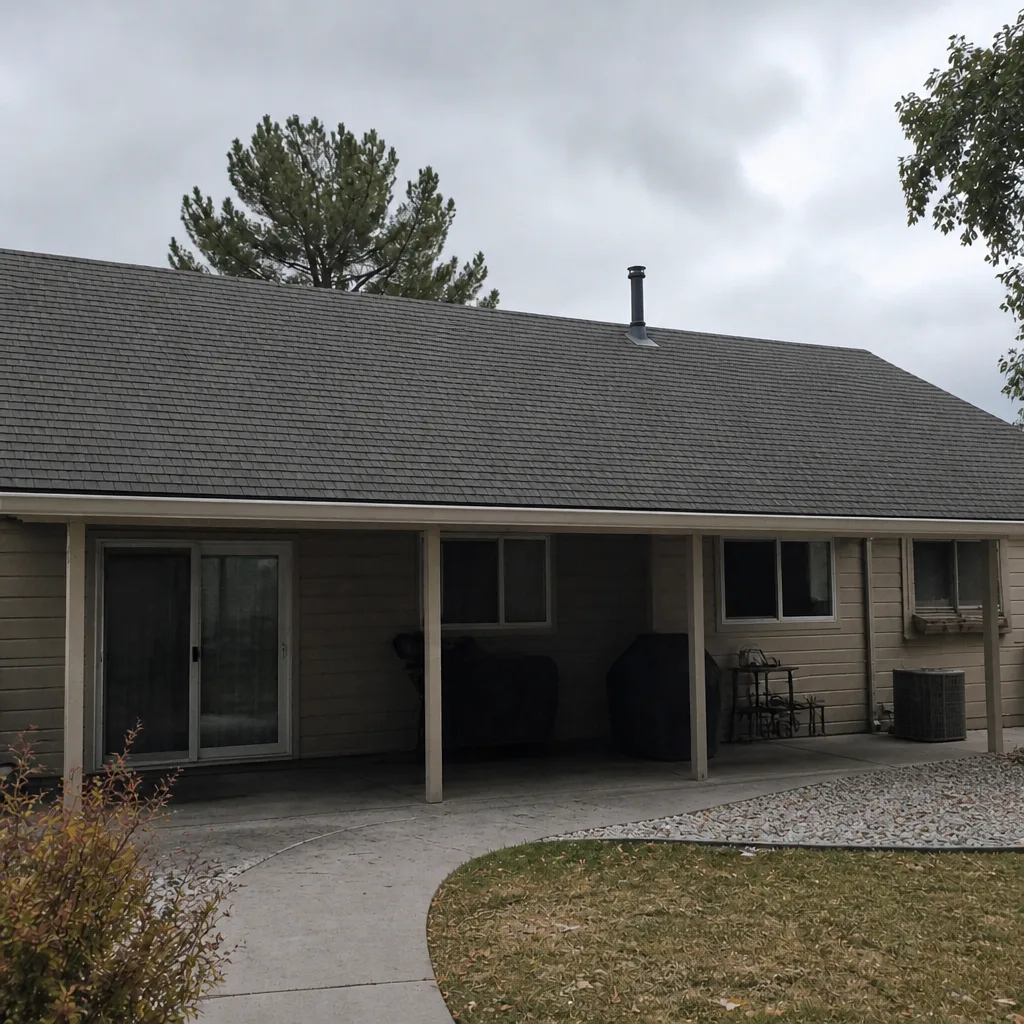
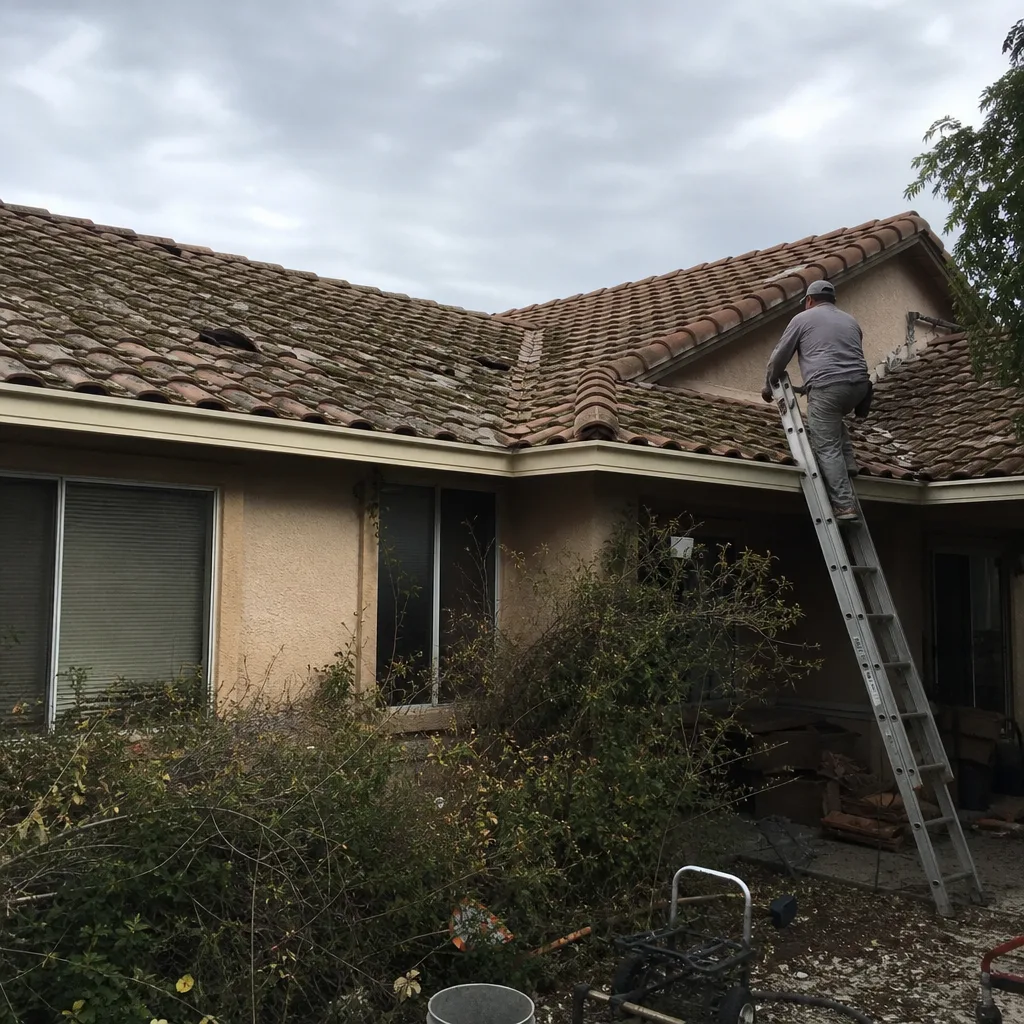
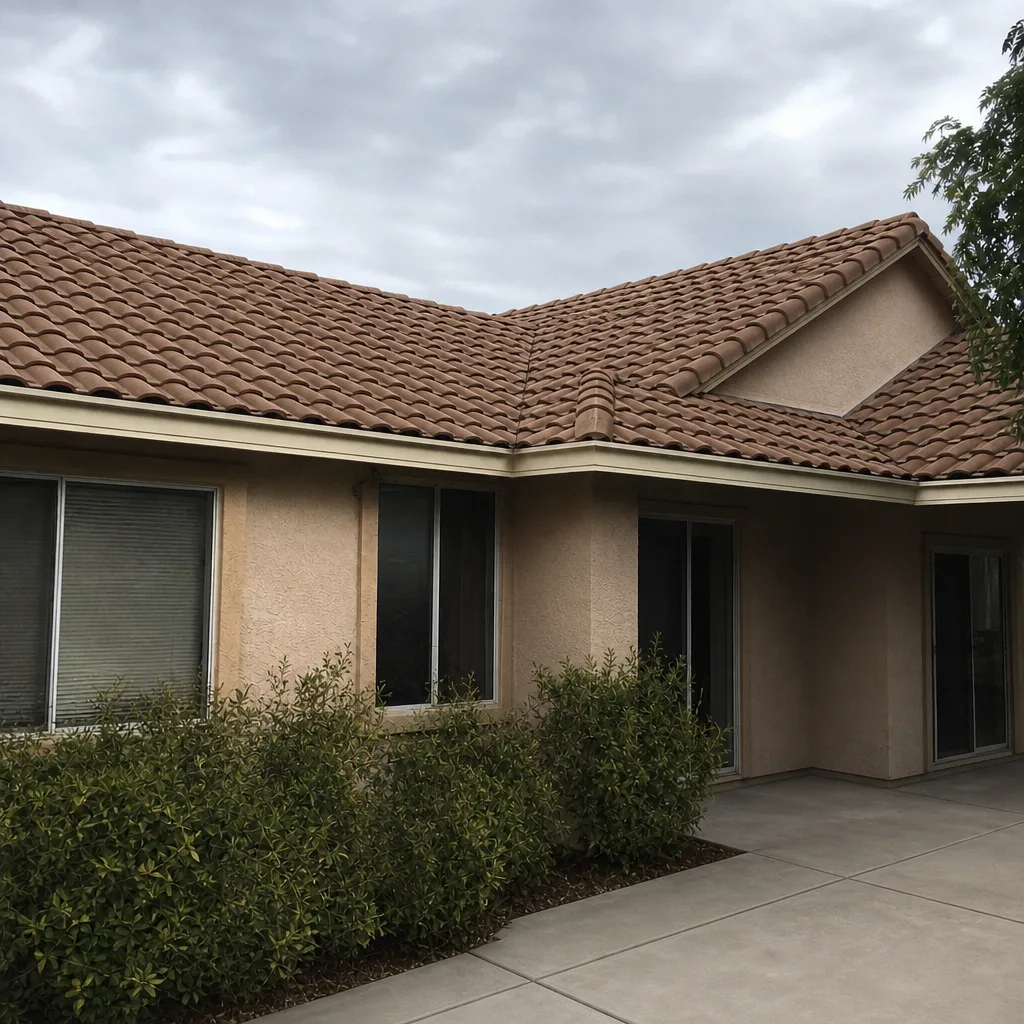
See the difference
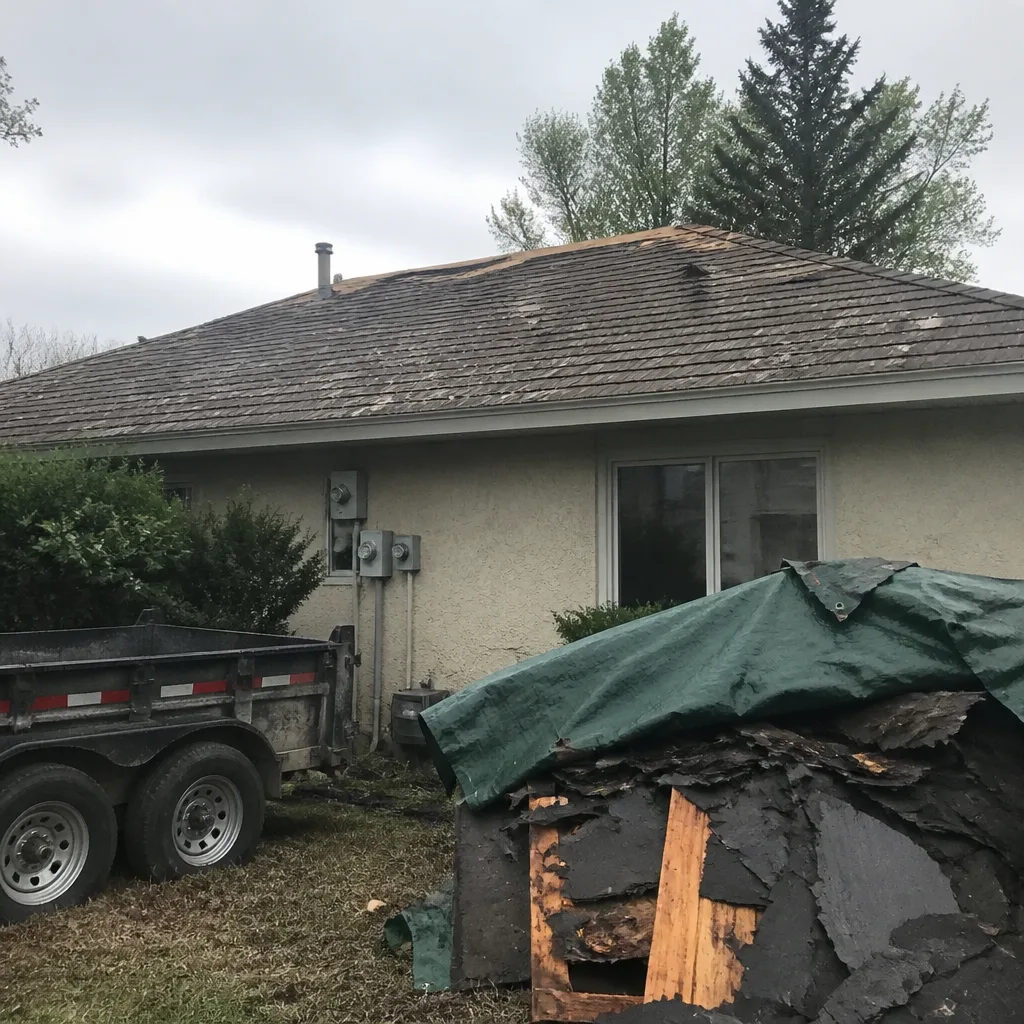 Before
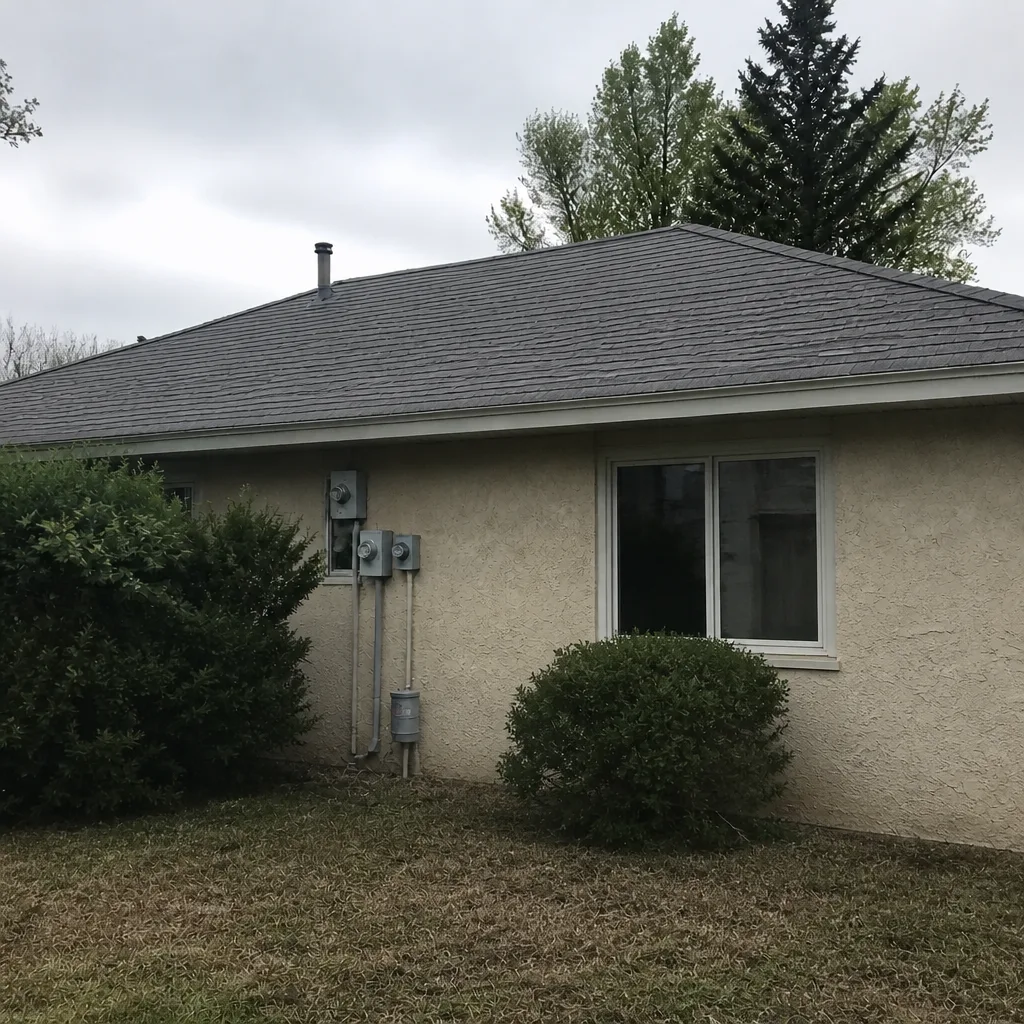 After
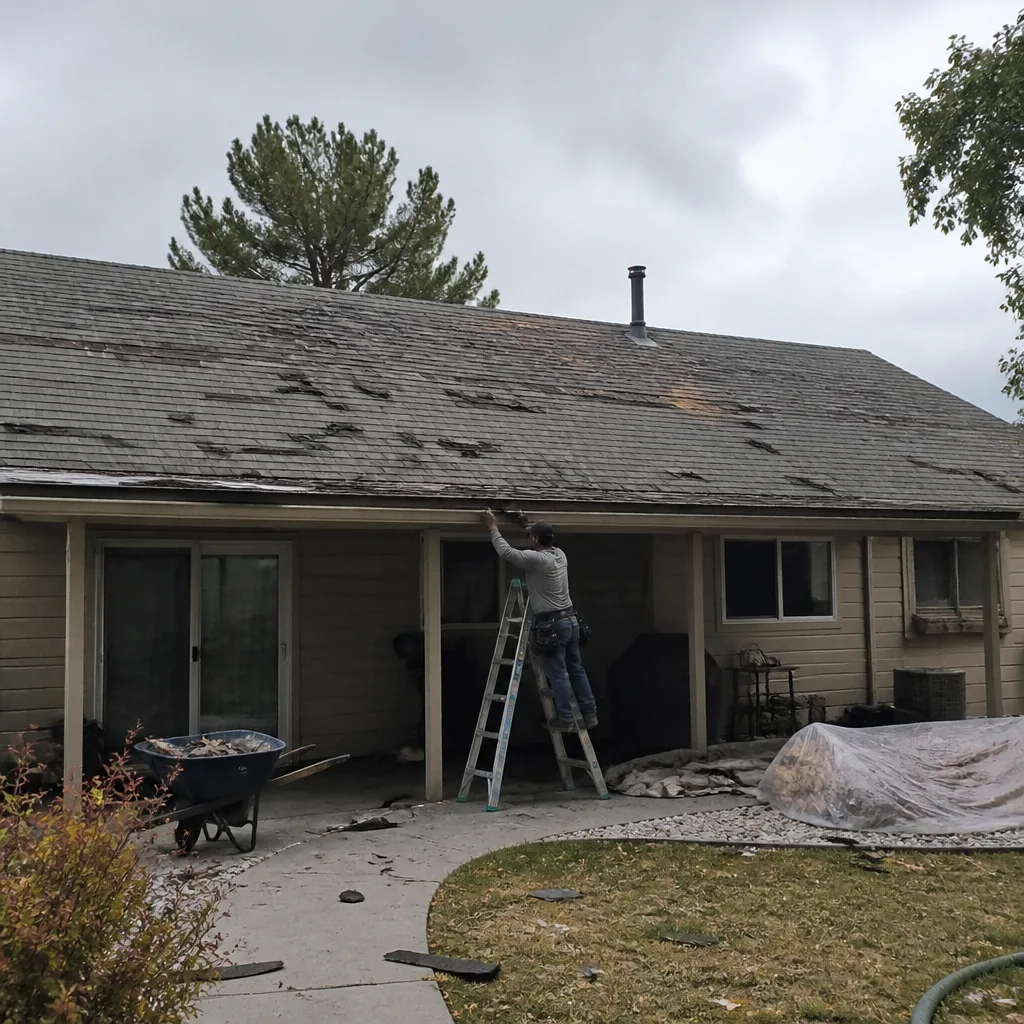 Before
 After
 Before
 After
When to Call a Professional
Call a roofer when you have active water inside the home, a fresh stain, a missing shingle, or a defect you’ve spotted near a valley, wall, ridge, or penetration. Call before the next monsoon if you’ve logged a small defect and aren’t sure it can wait. Call if a previous repair didn’t stop the leak, because a repeat leak usually means the diagnosis was wrong, not that the repair was poorly done. And call if you want a straight answer on repair vs. replace without a sales pitch. Roofer Winchester offers free estimates in Winchester – call (833) 390-2853. We answer 24/7, and our technicians have up to 9 years of experience with the diagnostic work that finds the real source. The written estimate sets the final price, and the scope is spelled out before work starts.
Frequently Asked Questions
Roof repairs in Winchester typically run from a few hundred dollars for a small pipe boot or nail pop fix up to the low four figures for a valley or step flashing repair that involves opening the roof and replacing flashing. The written estimate sets the final price, and we don’t quote until we’ve found the source. Call (833) 390-2853 for an exact quote – estimates are free.
Yes, many small repairs can be handled the same day once we’ve diagnosed the source. Pipe boots, small shingle repairs, and isolated flashing fixes are often same-day work. Larger jobs that need the roof opened up are scheduled around the written scope. Call (833) 390-2853 to book a diagnostic – estimates are free.
Because water travels laterally along the roof deck and framing before it breaks through the ceiling, sometimes several feet from the actual entry point. That’s why we trace backward from the stain through the attic to the roof penetration rather than guessing at the nearest visible defect. Call (833) 390-2853 for a diagnostic – estimates are free.
It’s a real leak path, though the urgency depends on timing. In a dry month, a single popped nail with an intact shingle above it can be logged and monitored. Heading into monsoon season in Winchester, the same nail pop is an open channel for water and should be fixed this week. Call (833) 390-2853 if you’re not sure which one you have – estimates are free.
Look in the attic. Staining on the top of the decking with a clear trail points to a leak from the roof, while staining on the underside with no top-side evidence points to condensation from poor ventilation. The two have completely different fixes, so this distinction matters before anyone quotes a repair. Call (833) 390-2853 if you want a trained eye on it – estimates are free.
Whether a repair needs a permit depends on the scope and the local building department’s rules, so we confirm that for the specific job rather than assumie. Structural repairs and full replacements typically require one; small patch repairs often don’t. We’ll tell you what your job needs in writing before work starts. Call (833) 390-2853 to schedule an inspection – estimates are free.
The Bottom Line
The roof doesn’t lie, but the ceiling stain often does. In Winchester, water travels on a low-slope roof before it penetrates, and that lateral path is the reason so many leaks get repaired twice. Find the entry from the attic and roofline first, then match the fix to the failure type: flashing, shingle, or ventilation. Know which defects can be monitored and which need to be fixed this week as monsoon season approaches. And read the quote, not just the price. Roofer Winchester does roofing only, across seven leading shingle brands, with a written scope on every repair. Call (833) 390-2853 for a free estimate. We answer 24/7. Fast dispatch from 7am to 7pm, Sunday through Friday.
Written by the team at Roofer Winchester.