
Last updated November 17, 2026
 Metal roofing
 Architectural shingles
 Tile roofing
 GAF
 Owens Corning
 Flat & low-slope
Free roof inspection with deck photos before we talk money - GAF and Owens Corning certified installation
Roofing Permits, Codes & Inspections in Winchester, NV: What You Need to Know
Most homeowners assume a permit is only a concern for a full tear-off, and that any smaller job is just a handshake and a shingle. That assumption is where trouble starts in Clark County. The line between a repair that needs no paperwork and an alteration that does is drawn in code, not in conversation, and it moves with the square footage you disturb. A contractor who skips the permit to save a few days can leave you holding an unpermitted alteration on your property record, and that surfaces at the worst possible moment: appraisal, inspection, or closing. In this guide we walk through the actual thresholds, what a county inspector looks at, how to check whether a permit exists, where your insurance exposure sits, and how neighborhood HOA rules add a second layer on top of county code. If you own a home in Winchester, this is the paperwork side of your roof explained without the runaround.
Quick Answer
In Clark County, minor roof repairs generally don’t require a permit, but a replacement that covers more than 25% of the roof’s surface area does, and the work must be inspected before it’s closed up. An unpermitted roofing job can become a disclosure problem when you sell, and it can complicate an insurance claim if the work is later tied to a fire or injury. Confirm the permit yourself through Clark County’s online portal rather than taking anyone’s word for it.
Styles & brands we work with
- Architectural shingles
- Metal roofing
- Tile roofing
- GAF
- Owens Corning
- Flat & low-slope
Table of Contents
- What Triggers a Roofing Permit in Clark County?
- Repair vs. Replacement: Where the Line Falls
- What a Clark County Roof Inspection Actually Checks
- How to Verify a Permit Was Pulled
- The Liability You Carry on an Unpermitted Job
- HOA Overlay Rules in Winchester-Area Communities
- How Winchester’s Climate Shapes Code Compliance
- The Permit and Inspection Process, Step by Step
What Triggers a Roofing Permit in Clark County?
The permit question comes down to scope, not to how the job feels on the day. A small patch over a damaged area is typically treated as a repair. Once you’re removing and replacing a substantial share of the roof covering, the county wants to see it, and the commonly cited trigger is more than 25% of the roof’s surface area. That’s the number that catches people out, because 25% is smaller than it sounds. On a typical single-story ranch home, a quarter of the roof is a lot of shingles, but on a two-story with a complex hip-and-valley layout, four or five squares of tear-off can edge past it faster than the homeowner expects.
Where the number matters most is in how the job gets split. Some contractors will propose “phasing” a replacement into small repairs to stay under the threshold. That’s not a magic workaround; if the county sees a re-cover that is functionally a full replacement, the inspection and the permit history won’t line up with what’s on the roof. A permit pulled under the correct scope protects you, and it protects the contractor too.
What you should ask before any job starts in Winchester:
- How many squares of roof surface will this job disturb, and what percentage of the total roof is that?
- Does this work fall above or below the 25% threshold as the county defines it?
- If a permit is required, who is pulling it, and whose name goes on it?
- What inspections does the county require before the roof is closed, and how are they scheduled?
- Will the final inspection be documented so I have a record for resale?
If a contractor can’t answer those five questions cleanly, that’s a signal to slow down. The paper trail matters as much as the tear-off.
Repair vs. Replacement: Where the Line Falls
The practical distinction most homeowners care about is which side of the line they’re on. A repair handles a specific failure: a lifted shingle field after a wind event, a valley that’s holding water, a flashing detail that’s failed at a chimney or skylight. A replacement is a re-cover or tear-off across a defined area, which is where the county’s interest in decking, underlayment, and ventilation comes in. Below is how we frame it when we’re deciding repair or replace: we’ll tell you which one you actually need.
Typical repair scope
- Isolated shingle replacement after wind or impact damage
- Flashing repair at penetrations, chimneys, and wall intersections
- Sealing or resetting lifted tabs and exposed fasteners
- Localized underlayment patching under a small area of failed covering
Typical replacement scope
- Tear-off of the existing roof covering across a defined area
- Decking inspection and replacement of any compromised sheathing
- New underlayment across the entire replacement footprint
- Ventilation correction where intake or exhaust is undersized
- New flashing at all penetrations and edges within the replacement area
The line isn’t arbitrary. A replacement touches the components that the county cares about from a life-safety and structural standpoint: the deck, the water barrier, and the ventilation that keeps the attic from cooking. A repair that doesn’t disturb those layers generally stays out of the permit pipeline. If your roof is closer to the end of its service life than the start, a contractor who sells you a “repair” over a large failing field is kicking the can down the road and possibly creating a permit problem on the next job. Our roof repair work is scoped to stay clearly on the repair side when that’s what the roof needs, and we’ll say so plainly when it tips over into a replace.
What a Clark County Roof Inspection Actually Checks
The finished shingle surface is the least interesting part of the inspection. Inspectors are looking at the layers underneath, because that’s where the failures that matter hide. In our experience, homeowners expect a visual check from the curb. What the county is actually verifying is that the system was built right, so the roof will perform for the life it’s supposed to deliver in desert heat.
Expect the inspection to cover:
- Decking condition. Soft spots, delamination, and fastening are checked because the shingles can’t perform on a compromised deck.
- Underlayment. The water barrier under the shingles is confirmed to be installed and to extend correctly at the edges and penetrations.
- Ventilation. Intake and exhaust balance is checked. An under-ventilated attic in Clark County’s summer heat is a performance problem and a code concern.
- Flashing and penetrations. Chimneys, skylights, plumbing vents, and wall intersections are reviewed for proper flashing and sealing.
- Fastening patterns. Nailing or stapling is verified against the manufacturer’s specification for the product being installed.
- Edge metal and drip edge. Perimeter detail is checked because that’s where wind uplift begins.
This is why material choice and the inspection are linked. If you’re installing an Owens Corning Duration shingle or a CertainTeed Landmark line, the fastening pattern and underlayment spec travel with the product, and the inspector is verifying the system, not just the shingle. Our Roofer Winchester inspection work is a standalone service for exactly this reason: catching a problem before it escalates is cheaper than chasing it after a leak, and knowing what the county will see is part of that assessment.
How to Verify a Permit Was Pulled
You can check this yourself, and you should, before work begins rather than after. Clark County maintains an online permit portal where you can search by address and see whether a permit has been issued for your property, its status, and the associated inspection history. Doing this takes a few minutes and gives you a record independent of what any contractor tells you.
The steps:
- Get the property’s parcel number or the exact situs address from your closing documents or the county assessor.
- Open the Clark County permit search and enter the address or parcel number.
- Look for any active or recently issued permit tied to roofing work at that address.
- Confirm the contractor named on the permit matches the company you hired, and that their license is active.
- Note the permit number. Save a screenshot or PDF for your records.
- After the job, confirm the final inspection has been recorded as passed.
If the portal shows nothing for a job that should have been permitted, stop the work and ask why. There’s no good reason a contractor can’t produce a permit number on request. The portal is public, and the answer should take less time than a phone call.
The Liability You Carry on an Unpermitted Job
This is the part most homeowners don’t think about until a problem surfaces years later. An unpermitted roofing job sits on your property record as an alteration that was never inspected. When you sell, that can be disclosed, questioned by a buyer’s inspector, or flagged during an appraisal. At minimum it’s a negotiating point. At worst it’s a repair bill to bring the work into compliance, on your dime.
The insurance exposure runs parallel. If a roofing failure is later tied to a fire, water intrusion, or an injury to someone working or living in the home, and the work was never permitted or inspected, the claim can get complicated. Insurers look at whether the work was done to code and whether it was inspected. An unpermitted job gives them a reason to push back. That’s not a scare tactic; it’s how claims adjusters read a file.
A few concrete risks to keep in mind:
- Resale friction. An unpermitted alteration surfaces during the buyer’s inspection and can delay or reprice a closing.
- Claim complications. An insurer may argue the roof wasn’t built to code and limit what they’ll pay.
- Injury exposure. If someone is hurt on the property in a way tied to the unpermitted work, the homeowner can end up in the middle of it.
- No warranty trail. Manufacturer warranties often depend on proper installation, and an unpermitted install weakens your position.
None of these are hypothetical. We’ve watched them play out in Winchester and across the valley. The fix is simple: verify the permit before the job, and get the final inspection on record.
HOA Overlay Rules in Winchester-Area Communities
Clark County code is the floor, not the ceiling. Many Winchester-area neighborhoods have an HOA overlay that restricts roof color, material type, and sometimes even the profile of the shingle. Those rules are independent of county code, and an inspector will not enforce them. That means a job can be fully permitted, pass inspection, and still violate your HOA’s architectural guidelines, which is its own kind of expensive.
What the HOA rules typically cover:
- Color palettes. Approved roof colors are often limited to a specific range of earth tones, grays, or terracotta shades.
- Material type. Some communities restrict the use of certain shingle profiles or tile-look products.
- Visible-from-street rules. Some HOAs care only about what’s visible from the street, which affects where a material change is allowed.
- Architectural approval. Many require written approval before material is ordered, not after.
- Contractor requirements. A few HOAs require proof of license and insurance from any roofer working on the property.
The order of operations matters here: confirm your HOA rules, then confirm county code, then pick the material. If you’re considering a premium line like GAF Timberline or a budget-tier option from IKO, get the color and profile approved by the HOA first. Our roof replacement work runs on the principle that the material has to clear both sets of rules before anyone orders it. Seven leading shingle brands means we can usually find the right product within an HOA’s allowable palette; a single-brand dealer often can’t.
How Winchester’s Climate Shapes Code Compliance
Clark County’s building code is written for a desert, and the roofing sections reflect that. The two things the heat demands are proper underlayment and ventilation. A roof built to milder-climate assumptions in Winchester won’t hold up the way it should. Summer attic temperatures get high enough that an under-ventilated attic accelerates shingle aging from the underside, and an underlayment that isn’t rated for the heat can fail earlier than expected.
What that means for your permit and inspection:
- Ventilation is code-relevant. Intake and exhaust must be balanced; a ridge vent without proper intake is a common and costly mistake.
- Underlayment spec matters. The county expects a water barrier appropriate to the climate, and the inspector will check.
- Flashing detail is critical. Wind-driven rain during monsoon season finds weak flashing; inspectors look for it.
- Thermal movement. Daily temperature swings in Winchester stress the whole assembly, which is why fastening patterns and edge detail get attention.
- Hail is uncommon here. Our storm damage conversation is usually about wind and monsoon rain, not hail, so the repair scope reflects that.
If a contractor proposes a roof assembly without ventilation correction, that’s a flag. It’s the kind of shortcut that passes a visual inspection from the ground and fails the one that matters. Our technicians have up to 9 years of experience, and the ones who’ve worked Winchester roofs know which details the county actually checks.
The Permit and Inspection Process, Step by Step
Here’s how the flow runs for a permitted replacement in Winchester, so you know what to expect and what to ask about at each stage.
- Scope documentation. The contractor produces a written scope that states the square footage of roof surface to be replaced, the percentage of the total roof that represents, and the materials to be installed. This is the document the permit application rests on.
- HOA check. Before the permit is filed, confirm the proposed color and material against your HOA’s architectural guidelines. Approval here prevents a re-do later.
- Permit application. The contractor files with Clark County and the permit is issued. The permit number is the record you’ll want to save.
- Pre-inspection documentation. The existing roof’s condition and any decking issues are documented. Photos of the tear-off stage help; ask for them.
- Rough inspection. The county inspects the decking and underlayment before the shingles go on. This is the inspection that catches sub-surface problems.
- Installation. Shingles are installed to the manufacturer’s specification, with flashing, edge metal, and ventilation completed to spec.
- Final inspection. The county confirms the assembly is complete and to specification. The pass goes on record.
- Close-out. You receive the final inspection record and the material warranty documentation. File both with your closing documents.
For a job that stays on the repair side, steps 1 through 3 usually collapse into a written scope and a conversation, and steps 5 and 7 don’t apply. But the same principle holds: get the scope in writing, know which side of the line you’re on, and keep the record. A free estimate is the right place to start that conversation for anyone comparing options in Winchester.
Common Mistakes to Avoid
- Taking “it’s just a repair” at face value. Ask for the square footage and the percentage of the roof surface affected. If it’s over 25%, a permit is generally required and the job should be treated as a replacement.
- Trusting a contractor’s claim without checking the portal. Clark County’s online permit search is public. Verify the permit exists and that the named contractor is licensed before work begins.
- Ignoring the HOA until after material is ordered. An HOA color or material restriction can force a re-roof at your cost, even when the county permit and inspection are clean. Get approval first.
- Skipping the rough inspection. Once shingles are on, the decking and underlayment can’t be verified without tearing the job apart. If a contractor is willing to skip it, walk away.
- Not keeping the final inspection record. A passed inspection is your proof of a compliant alteration. Save it with your closing documents, not in a drawer that gets lost.
- Assuming a manufacturer warranty covers an unpermitted install. Shingle warranties like GAF, CertainTeed, and Owens Corning lines depend on proper installation, and an unpermitted job can undermine a claim.
- Choosing a generalist handyman for a roofing job. A roofer who works across seven major shingle brands has the material depth to meet HOA and code requirements. A jack-of-all-trades roofer does roofing on the side, and the paperwork usually suffers first.
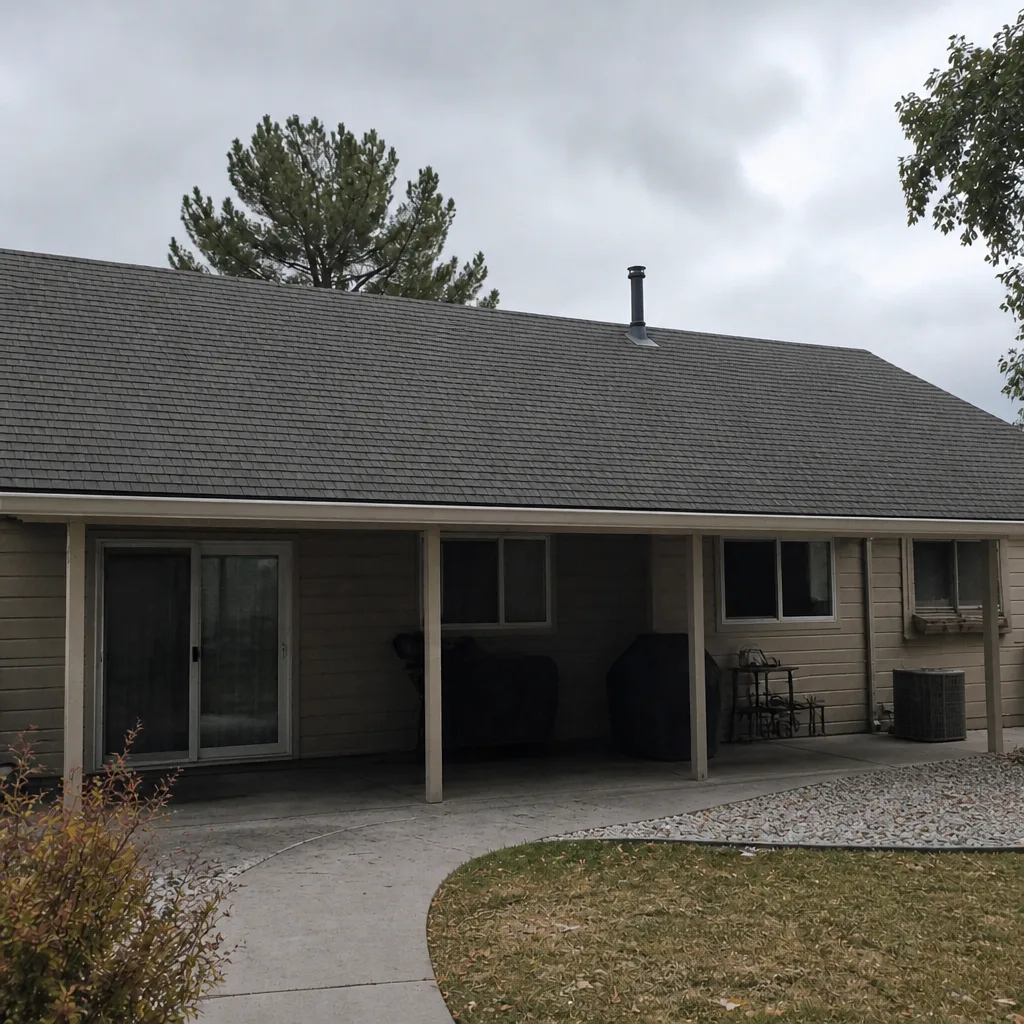
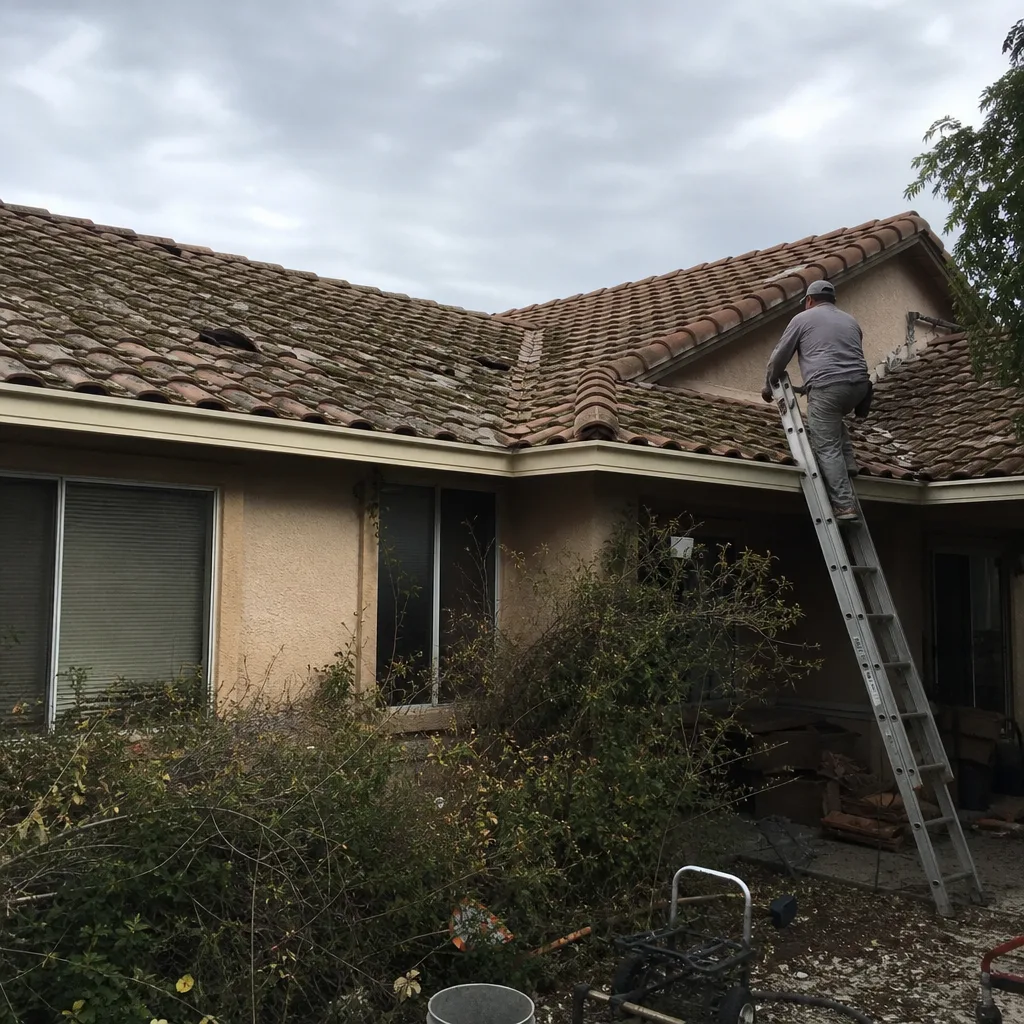
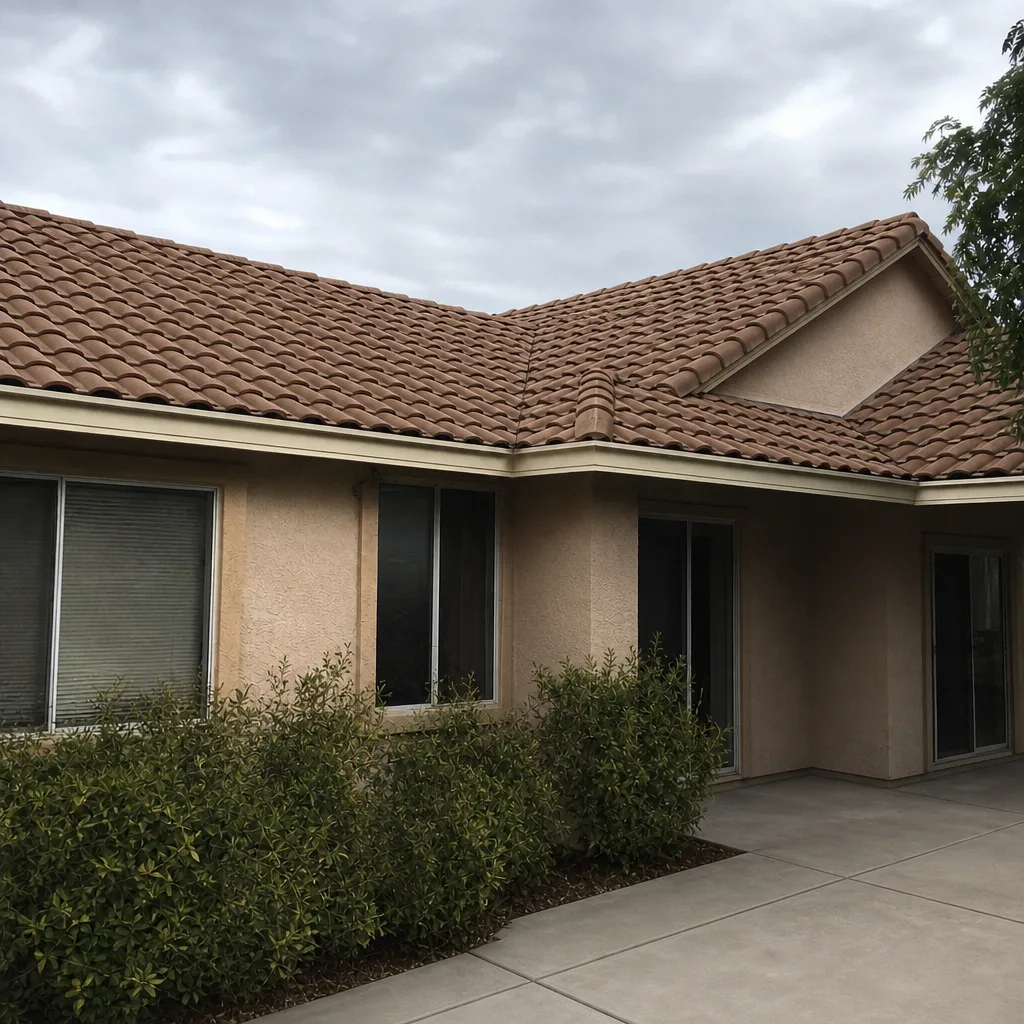
See the difference
 Before
 After
 Before
 After
 Before
 After
When to Call a Professional
Some of this you can check yourself: the permit portal, the HOA rules, the written scope. But the moment the assessment involves the decking, the underlayment, the ventilation, or whether you’re actually over the permit threshold, that’s a professional call. We’d also urge you to call when you’re seeing active water intrusion, when the roof is at or near the end of its service life, when your HOA has specific material constraints you’re not sure how to meet, or when an inspector has flagged something you don’t understand. Catching a small issue before it turns into a full replacement is the whole point of a dedicated inspection. Roofer Winchester offers free estimates in Winchester, and we’ll tell you honestly whether you’re looking at a repair or a replacement. Call (833) 390-2853.
Frequently Asked Questions
A small, localized repair generally doesn’t require a Clark County permit, but a replacement covering more than 25% of the roof’s surface area does. If you’re unsure which side of the line a job falls on, ask the contractor to state the square footage and the percentage of the total roof. Call (833) 390-2853 for a free assessment if you want a straight answer.
It checks the decking, the underlayment, the ventilation, the flashing, and the fastening pattern. The finished shingle surface is the least interesting part of the inspection. An inspector who approves an under-ventilated or underlayered roof hasn’t done the county’s job, so the sub-surface components are where the review concentrates. Call (833) 390-2853 for an independent pre-inspection if you’re considering a replacement.
Search your property address on Clark County’s online permit portal and look for open or recently issued permits tied to roofing. Confirm the contractor named matches the company you hired, and note the permit number for your records. If nothing shows up for a job that should be permitted, stop the work and ask why. Call (833) 390-2853 if you want help reading what the portal shows.
An unpermitted alteration can become a disclosure question at resale, can complicate an insurance claim if the work is later tied to a fire or injury, and can cost you to bring into compliance. The fix is to have the work documented and inspected. Call (833) 390-2853 and we can assess what’s on the roof and what the county will look for.
HOA rules are a separate layer, not an override. A job can be fully permitted and pass county inspection while still violating your HOA’s architectural guidelines, which means both sets of rules apply. Get the HOA’s written approval before material is ordered. Call (833) 390-2853 for help comparing brands against a specific HOA palette.
The job itself typically runs a few days, but the permit timeline and the scheduling of both the rough inspection and the final inspection add to the calendar. The rough inspection has to happen between tear-off and shingle install, so the sequencing matters. Call (833) 390-2853 for a written scope and an honest timeline.
The Bottom Line
The permit question in Winchester isn’t about paperwork for its own sake. It’s about what you can prove when it matters: at resale, at claim time, and when an inspector looks at your decking. The 25% threshold is the number to know, and the portal is the tool to verify it. HOA rules sit on top of county code and need to be settled before a single shingle is ordered. A repair stays a repair; a replacement gets a permit and an inspection on record. If you’re evaluating a job now, get the scope in writing, confirm which side of the line it’s on, and ask the questions we’ve laid out here. That’s the difference between a roof and a record you can stand behind.
Roofer Winchester offers three focused roofing services: repair, replacement, and inspection. Six of the industry’s leading shingle brands, one straightforward recommendation. Roofing only. Done right.
Call (833) 390-2853 for a free estimate. We answer 24/7. Fast dispatch from 7am to 7pm, Sunday through Friday.
Written by the team at Roofer Winchester.