
Last updated November 17, 2026
 Metal roofing
 Architectural shingles
 Tile roofing
 GAF
 Owens Corning
 Flat & low-slope
Free roof inspection with deck photos before we talk money - GAF and Owens Corning certified installation
Roofing Warning Signs: A Winchester Homeowner’s Reference Guide
A roof in Winchester rarely leaks during the dry months. That’s exactly what makes it dangerous. In wet climates, homeowners get loud warnings: wet stains spreading across a ceiling, moss creeping down the slope, water pooling where it shouldn’t. In Winchester, the sky can stay silent for months while the real damage happens out of sight. The gap between when a roof starts failing and when you finally notice something inside your home can stretch to 18 months of quiet decking deterioration. By the time the warning signs show up indoors, the repair is often no longer a repair. This guide walks through what a desert roof looks like when it’s failing, what to check in your attic, why low-slope sections behave differently during a monsoon, and how to tell the difference between a fixable problem and a roof that’s genuinely used up.
Quick Answer
The most common warning signs of roof trouble in Winchester are granule loss on the shingles, cupping and curling at the edges, chalky oxidation on the surface, cracked sealant around HVAC penetrations, ponding water that stays more than 48 hours after a monsoon, daylight visible from inside the attic, and compressed insulation at the perimeter. Any single one of these deserves an inspection; two or more together usually mean the roof has moved past the repair stage. Warning signs on a desert roof are quieter than in wet climates, so the homeowner has to look deliberately rather than wait for a leak.
Styles & brands we work with
- Architectural shingles
- Metal roofing
- Tile roofing
- GAF
- Owens Corning
- Flat & low-slope
Table of Contents
- Granule Loss and UV Oxidation: The First Two Signs
- Cupping vs. Curling: Why the Difference Matters
- Low-Slope and Flat Sections During Monsoon Season
- Attic Warning Signs: Heat, Daylight, and Insulation
- Flashing Failures Specific to Desert Construction
- Repair vs. Replacement: Reading the Signals
- Winchester Neighborhood Context
Granule Loss and UV Oxidation: The First Two Signs
Shingles on a Winchester roof take a beating from ultraviolet light in a way that shingles in cooler, wetter markets don’t. The sun doesn’t strip a roof overnight. It does it in stages, and the earliest stages are visible from the ground if you know what to look for.
Granules are the mineral coating pressed onto the surface of an asphalt shingle. They’re the roof’s first line of defense against UV, and once they go, the asphalt underneath starts cooking. The classic signs of granule loss:
- Bare patches where the asphalt shows through as a darker, smoother surface than the surrounding shingle.
- Granules collecting in the gutters (in homes that have them) after rain, sometimes in visible drifts.
- A sandy, gritty texture at the bottom of downspout splash zones or along the drip edge.
- Discoloration that reads as dull or patchy rather than a uniform gray to brown.
As UV keeps working, the asphalt itself starts to break down. This is where the “chalking” shows up: a fine, pale, powdery residue that lifts off the shingle surface when you run your hand across it. If a shingle leaves dust on your fingers, its remaining lifespan is limited. Chalking doesn’t mean the roof is leaking today; it means the top layer of the asphalt has been chemically degraded by sun. It’s the closest thing a desert roof has to an early-warning flare.
Older 3-tab shingles and the first generation of architectural shingles both show chalking more readily than modern lines. If your roof was installed with a budget-tier product and you’re seeing chalk and bare patches together, the remaining useful life is much shorter than the calendar suggests. This is where a product conversation matters. When we recommend a replacement, we’re working with seven shingle lines from GAF, CertainTeed, Owens Corning, IKO, Atlas, Tamko, and Boral so the recommendation matches your home and your budget rather than whichever brand is in stock. If you’re seeing granule loss on more than about a third of the visible slope, it’s worth a dedicated inspection now rather than waiting for a leak.
Cupping vs. Curling: Why the Difference Matters
Homeowners use the words cupping and curling interchangeably, and that’s a mistake with real consequences. They point to different failure modes, and one is usually a much bigger deal than the other.
Curling is when the shingle lifts at the edges and the flat middle stays down. It typically shows up as shingle edges that no longer lay flat against the course below, often more pronounced at the rakes and eaves. Curling usually indicates a shingle that’s drying out from the top down, and it can also show up from improper installation, like shingles nailed too high so the adhesive strip never sealed.
Cupping is when the shingle’s center dips and the edges rise on both sides, giving it a concave shape like a shallow bowl. Cupping points to moisture underneath the shingle. Either the underlayment is wet from a leak above, or moisture is trapped from below because attic ventilation isn’t working. In Winchester, cupping almost always signals attic heat and humidity that can’t escape. A poorly vented attic with a black shingle roof can reach well over 150 degrees Fahrenheit at peak summer, and the shingle itself gets cooked from the underside on top of the UV abuse from above.
Both are visible from the ground with a slow scan of each slope from a few different angles. And both deserve a closer look:
- Curling at the edges only: often fixable or at least manageable, but worth confirming the roof isn’t under-ventilated.
- Cupping in patches: check the attic first for signs of moisture or heat buildup before assuming the shingle is the problem.
- Cupping across a whole slope: usually time to have the whole system evaluated, because it suggests the roof deck and ventilation are both compromised.
- Curling plus visible nail pops: often a sign the installation didn’t follow the manufacturer’s fastening pattern, worth a written inspection.
If your roof is curling and losing granules together, the honest answer is usually that the shingles are done. A roof repair can buy time on isolated sections, but widespread curling and cupping across multiple slopes is an inspection conversation, not a patch-it-and-move-on conversation.
Low-Slope and Flat Sections During Monsoon Season
Many Winchester homes have at least one low-slope or flat section – a covered patio, a porch extension, a garage transition, a section over an addition. These areas behave completely differently from the pitched roof, and the warning signs only show up on the days you aren’t looking.
The single most useful thing to watch on a low-slope section is how long water stays after a monsoon. A monsoon storm in Winchester can drop a lot of water fast, and the low-slope roof either drains it or holds it. The benchmark we use:
- Under 24 hours: the drainage is working. Standard.
- 24 to 48 hours: there’s a drainage issue to look at. Debris, a low spot, or a scupper that isn’t flowing.
- Over 48 hours: this is a warning sign, not a quirk. Water sitting on the roof for more than two days is actively degrading the membrane from underneath.
- Any ponding at all on a two-day-old roof: worth a call, because it usually means the slope or the drains were wrong from day one.
Also check the flat section itself for these:
- Blisters and bubbles: trapped moisture or air between the membrane and the deck.
- Alligator cracking: a pattern of fine cracks that looks like reptile skin, common on aged modified bitumen or EPDM.
- Open seams at the edges and around penetrations.
- Rust streaks running from fasteners or metal edging.
- Interior staining under the flat section after a monsoon rain, especially in a garage ceiling or covered patio soffit.
The tricky part is that a low-slope section can leak for a full monsoon season and dry out completely, leaving no visible interior stain by the time you check. That’s the desert pattern: evidence comes in a short window, then disappears. If you suspect a low-slope section is holding water, an inspection done before the next storm is worth more than one done after.
Attic Warning Signs: Heat, Daylight, and Insulation
The attic is where a desert roof tells the truth about itself. What’s happening on top of the roof is only half the story; what’s happening underneath is where the failure is usually confirmed first.
Three things to look for on a walk-through of the attic:
- Daylight through the roof deck. Not through a vent. Through the deck itself, at a flashing joint, at a ridge, at a transition. If you can see daylight between boards or around a penetration, water and hot air can get in the same way. That’s a direct sign of a compromised roof system, and it’s a call-a-professional scenario.
- Heat mapping on the roof deck. On a hot afternoon, shingle roofs get noticeably hotter in areas where ventilation is blocked or where the underlayment has already failed. Look for patches of the deck that are far hotter than surrounding areas when you’re up there (or feel the ceiling from inside on a hot day). These are the same spots where cupping and chalking tend to show up on the outside.
- Compression or settling of the insulation. Insulation that’s been pushed down, moved, or soaked and dried no longer does its job. Look for batts or blown-in insulation that’s visibly compressed near the perimeter, or that’s been moved away from the eaves. This is the quiet killer of desert roof performance, because the compression is a sign of moisture or wind intrusion, not just a lost R-value.
Add these attic-level checks to the same visit:
- Dark staining on the rafters or the underside of the sheathing, especially around a chimney, a swamp cooler curb, or a bathroom exhaust vent. It’s the closest thing in Winchester to the wet-climate warning most homeowners are used to.
- Daylight around an exhaust fan or bath fan means the fan is likely venting directly into the attic (not through the roof), which is a separate red flag.
- Animal droppings or nest material, which often show up at the point where a shingle has lifted and opened a gap.
None of these checks require climbing onto the roof. If any of them show up, though, it’s time for a real inspection. Our technicians have up to 9 years of experience, and a dedicated inspection catches this kind of thing before it becomes a leak inside your living space.
Flashing Failures Specific to Desert Construction
Desert homes have a specific set of penetrations that wet-climate homeowners don’t see nearly as often, and the flashing around them is where a huge percentage of Winchester roof leaks start. The main offenders:
- Swamp cooler curbs. Roof-mounted evaporative coolers are common in Winchester, and the curb where the unit meets the roof relies on sealant and flashing details that take a lot of sun. Sealant that’s cracked but still in place looks fine. Water sneaks past it on the first monsoon rain. If a swamp cooler has been on the roof for a few years, the sealant around the curb is worth a physical check.
- HVAC line penetrations. Refrigerant lines and conduit come through the roof at numerous small points. The boots and flashing around those penetrations crack under UV faster than the shingles do. Look for cracked boots, cracks in the sealant bead, or a boot that has pulled up off the deck.
- Skylight seals. The seal between the skylight frame and the shingle course below is a favorite failure point. Visibly shrinking or cracked sealant, or rust running from the frame, is a warning.
- Vent pipe boots. Plumbing vents come through at the ridge or below and use a rubber or plastic boot; those boots crack and split as they age in the sun. A split boot is small but can let water straight down the vent pipe into the attic.
- Wall and roof transitions. Where a lower roof section meets a second-story wall, step flashing has to be correct. It doesn’t look like much from the ground, and it’s one of the most common leak points we see on Winchester inspections.
Sealant has a working life in desert conditions; it can fail years before the shingles around it do. What we look for is not whether it’s there, but whether it’s still bonded to both surfaces. When it isn’t, the fix is relatively small compared to the damage that a season of unnoticed water intrusion causes underneath.
Repair vs. Replacement: Reading the Signals
This is the question every homeowner eventually asks, and the honest answer depends on a specific set of signals, not on how old the roof is. Two roofs installed on the same day in Winchester can arrive at repair vs. replace at very different times. Here’s how we sort it out.
Signs that a repair is a sufficient and correct fix:
- Damage is confined to one slope, one area, or one flashing point.
- The surrounding shingles are still bonded, still have visible granules, and don’t chalk.
- A single leaking penetration (a boot, a curb, a skylight seal) is the only documented problem.
- The deck is dry and firm when it’s probed from the attic.
- The interior paint or texture has one localized stain, not a pattern across multiple rooms.
Signs the roof system as a whole has failed and repair would just kick the replacement down the road:
- Granule loss on more than about a third of the total visible slope area.
- Chalking lifts off the surface when you touch it.
- Cupping or curling on multiple slopes.
- Multiple interior stains or stains that reappear every monsoon.
- Ponding on a low-slope section that exceeds 48 hours and keeps coming back.
- The same leak has been repaired more than once in the same spot.
When the signals point to replacement, the honest conversation is about which shingle line makes sense for the home and the budget. The right product for a Winchester home depends on the direction each slope faces, how much direct sun it gets, and whether the roof has a low-slope section attached. Whether that’s a mid-tier architectural shingle or a premium line, we work with seven shingle manufacturers including GAF, Atlas, and Tamko. The roof replacement conversation is a scope-of-work and material conversation, not a pressure sale. For a closer look at either path, our Roofer Winchester team can walk the roof with you and lay out both options before you commit.
Winchester Neighborhood Context
Winchester sits in the Las Vegas Valley, and the neighborhoods here share a climate that shapes how a roof ages. The older parts of Winchester have a lot of low-slope and flat sections on patios and garage transitions, often with lower-pitch coverings that rely on membrane material rather than shingles. Homes on the east side of the valley face the sunrise, which means the east slope takes direct morning sun while the west slope takes that long, hot afternoon hit; that difference shows up in uneven chalking and uneven shingle wear across a single roof. Neighborhoods closer to the center of Winchester tend to have homes with roof-mounted swamp coolers and multiple HVAC penetrations, which is exactly where the flashing conversation starts.
Newer construction tends to use architectural shingles on steeper pitches, with tighter attic envelopes and less attic ventilation than older homes. Both patterns have their own weaknesses: older roofs fail at flashing and membrane, newer roofs fail at ventilation and heat, and both fail quietly because the desert doesn’t produce the wet stains most people are trained to watch for. What a roof needs in Winchester is the opposite of the wet-climate habit: check in the dry season, not just after a storm.
Two homes on the same street can also be at completely different points in their roof life if they were built in different decades or had additions added under different roofing standards. Neighborhood-level assumptions are a bad basis for a repair-or-replace decision; a real inspection on the actual roof is what tells you the truth. If you’re in the Winchester area and want to get ahead of a quiet problem, a dedicated roof inspection is the correct first step, and it’s something we offer as a standalone service rather than as a sales call.
Common Mistakes to Avoid
- Waiting for an interior leak before calling anyone. In a wet climate that’s normal; in Winchester it’s usually two or three years too late. The warning signs on the shingle come first, and that’s the window to act in.
- Judging shingle age by the calendar instead of the surface. A roof installed with a budget-tier shingle on the hottest facing slope can show chalking and curling well before the manufacturer’s expected lifespan. Read the surface, not the year on the permit.
- Treating ponding water on a flat section as a cosmetic issue. Water sitting for more than 48 hours after a monsoon is actively degrading the membrane. It needs to be evaluated, not ignored.
- Replacing cracked sealant without fixing the underlying boot or curb. The sealant is the symptom. A cracked vent boot, a failed swamp cooler curb, or a pulled skylight gasket will leak again even with fresh sealant on top.
- Assuming a 3-tab or original equipment shingle roof will reach 20 to 25 years because the warranty says so. Desert UV cuts into that expectation. Warranty is a maximum, not a promise.
- Letting a repair pile up instead of checking the whole system. One patched spot is normal. Three repairs on the same roof is a signal that the roof has crossed the repair-versus-replace line.
- Skipping the attic walk-through. Half of the useful warning signs live in the attic, not on the roof. If nobody looked inside, nobody has actually inspected the roof.
See the difference
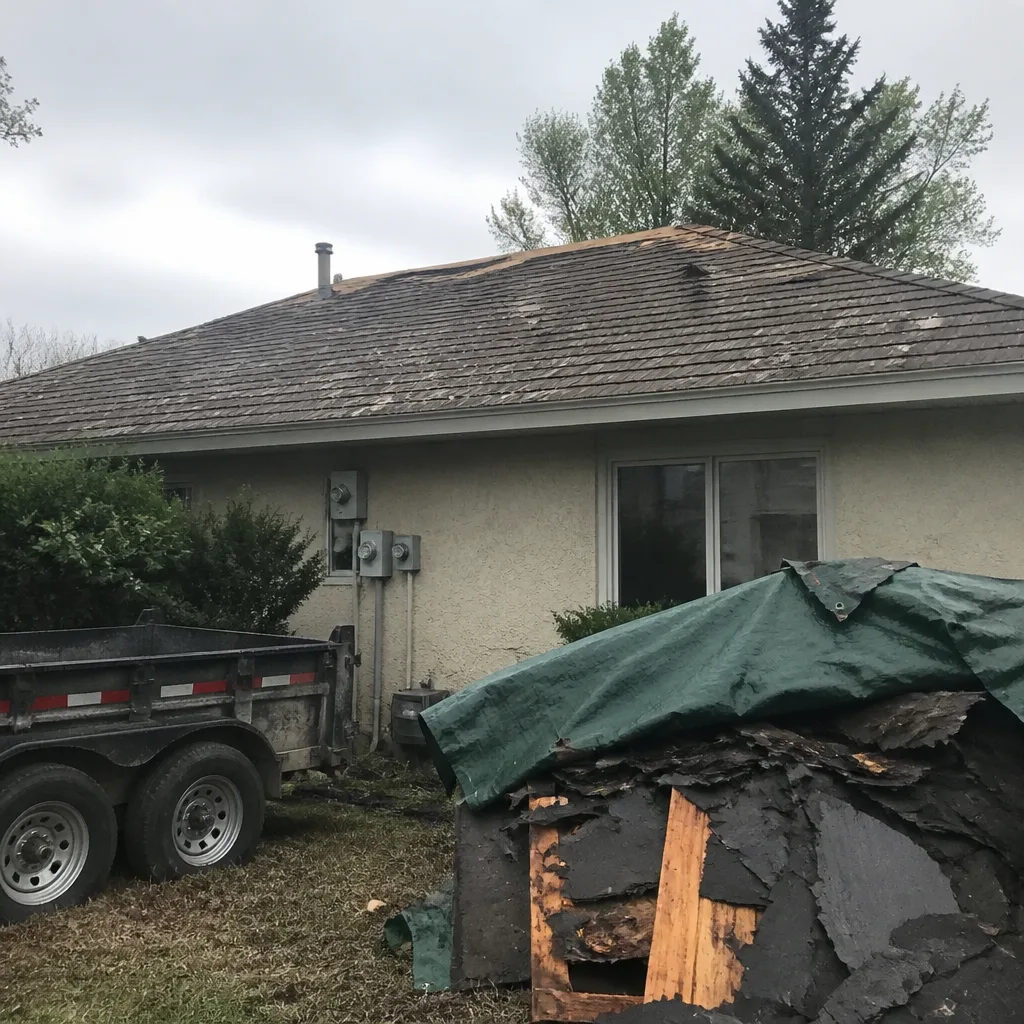 Before
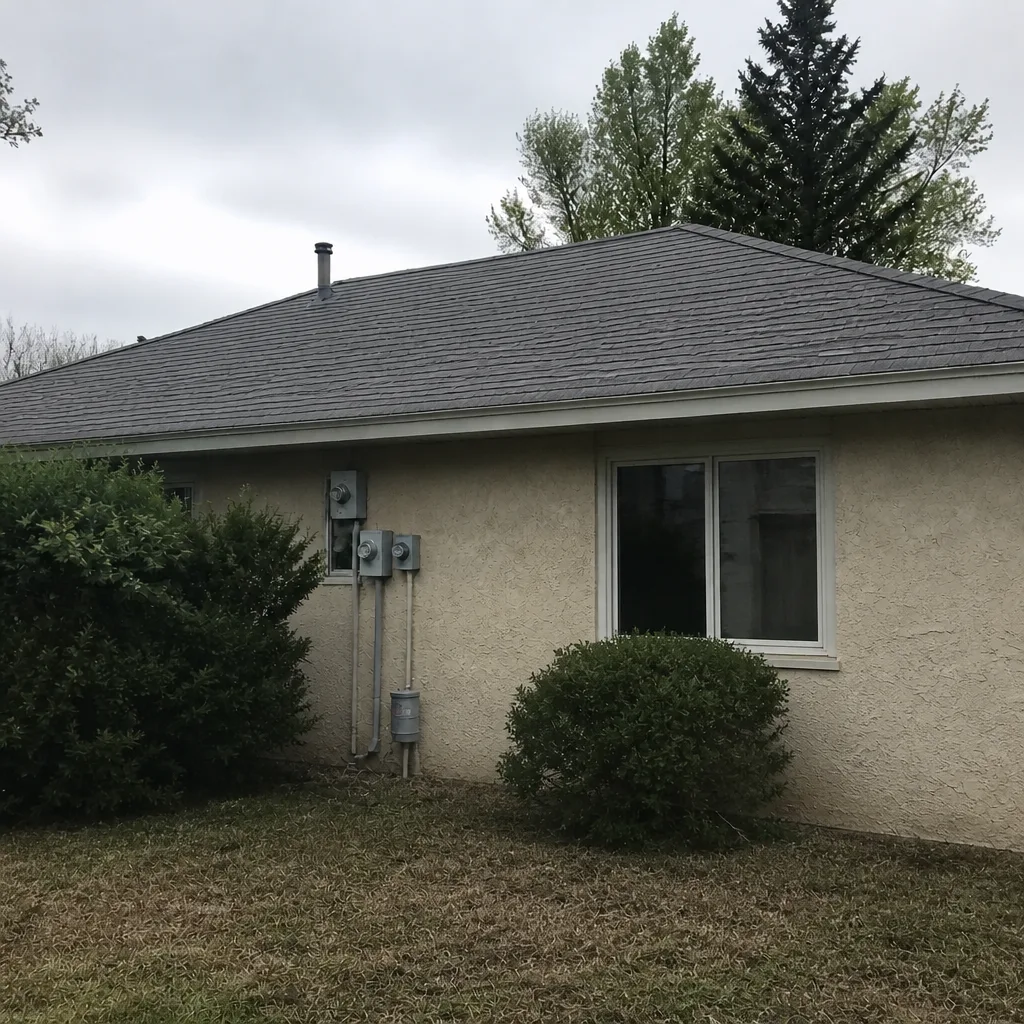 After
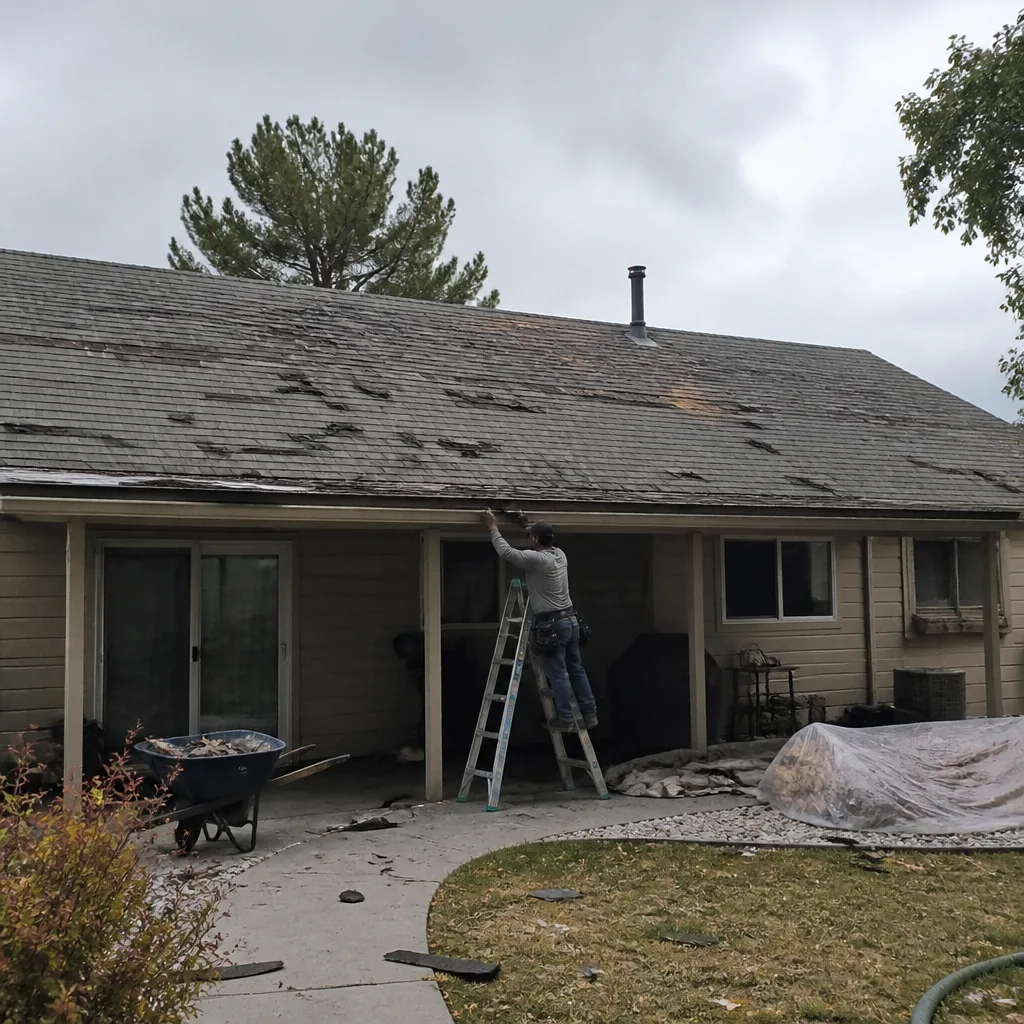 Before
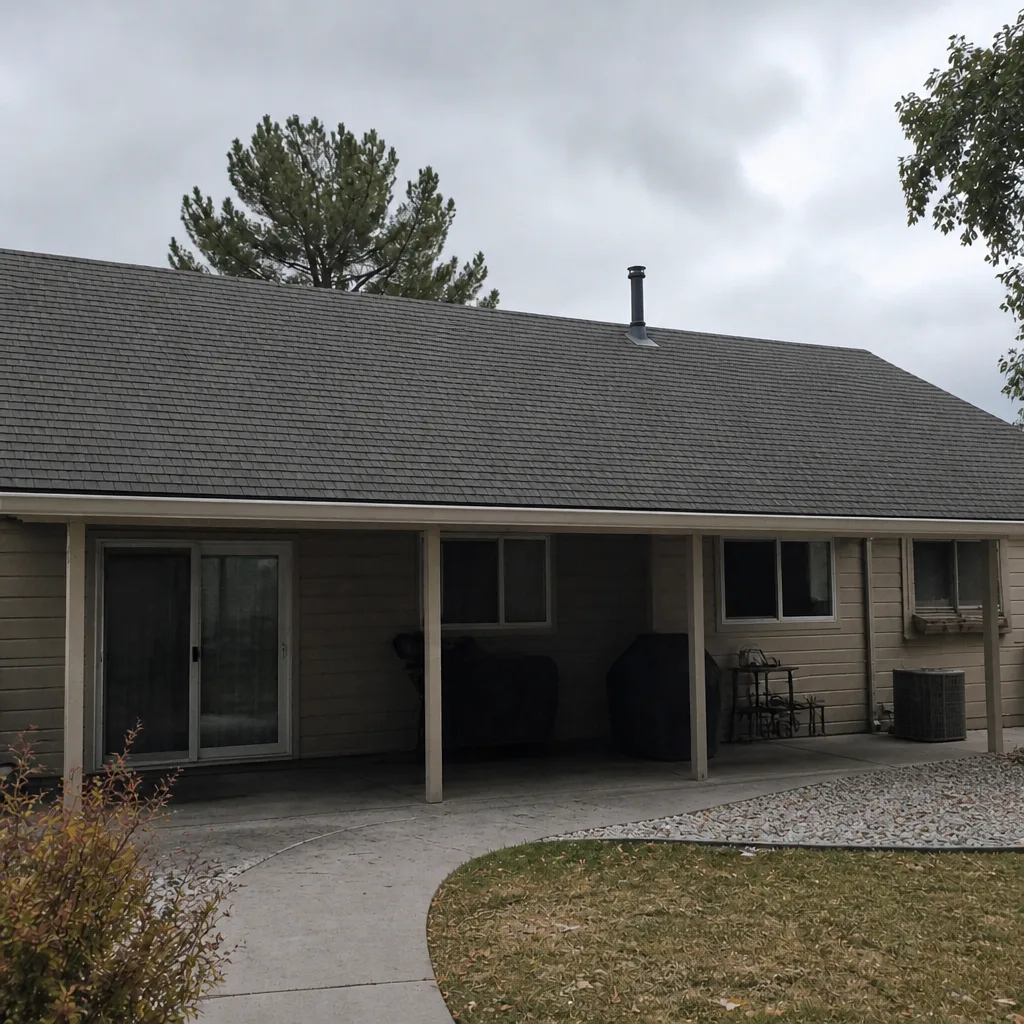 After
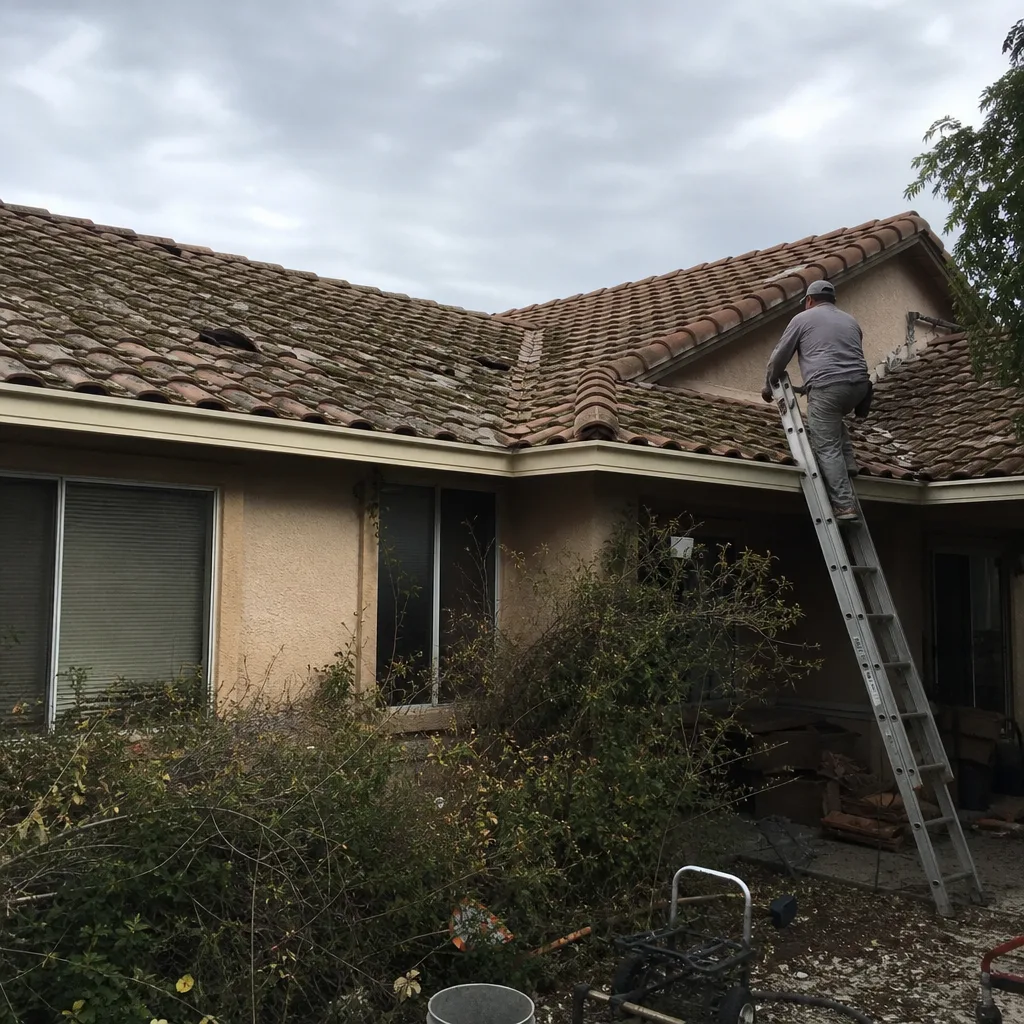 Before
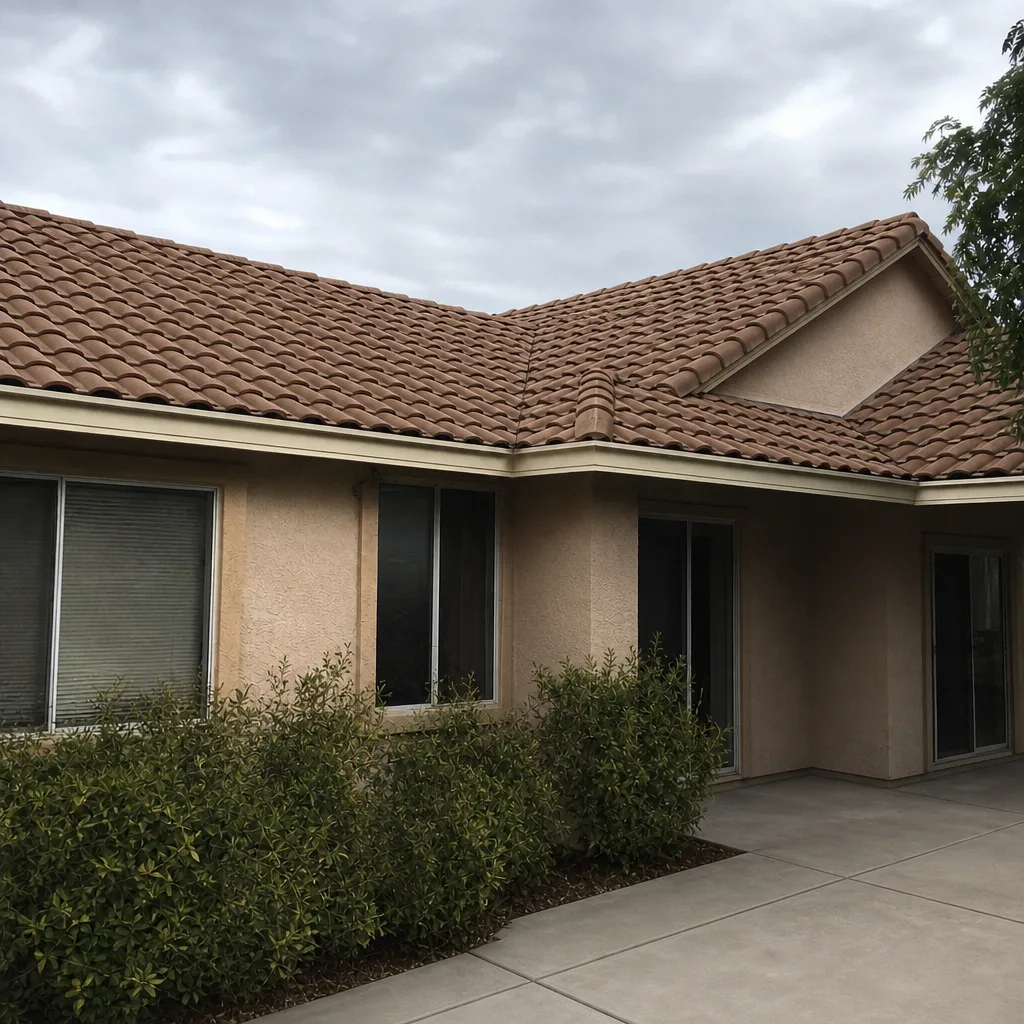 After
When to Call a Professional
Call a professional the moment two or more of the warning signs in this guide show up together, or the moment any single sign shows up alongside a reoccurring interior stain. Call if you see daylight through the roof deck from inside the attic, if a low-slope section holds water for more than 48 hours after a monsoon, if you can see chalk on your fingertips after touching a shingle, if there’s visible cracking in the sealant around an HVAC penetration or swamp cooler curb, or if a repair has been redone in the same spot more than once. Roofer Winchester offers free estimates in Winchester. Call (833) 390-2853 to schedule an inspection, and we’ll tell you plainly whether the roof needs a repair or a replacement.
Frequently Asked Questions
The honest test is scope, not age. If damage is confined to one area or one flashing point and the surrounding shingles are still bonded and granule-covered, a repair is usually the right call. If the surface shows widespread granule loss, chalking, cupping, or multiple slopes with staining, the roof system has failed and replacement is the correct answer. Call (833) 390-2853 for a free estimate and we’ll walk through the signs on your actual roof rather than guessing from the curb.
Granule loss shows as dark, smooth bare patches on the shingle surface where the mineral coating has worn off, often with granules collecting in the gutters or at the drip edge. Once granules go, the asphalt underneath is exposed to direct UV, so the shingle starts chalking and drying out quickly. If you’re seeing bare patches on more than a third of a slope, it’s worth a free inspection – call (833) 390-2853.
Water sitting for more than 48 hours after a monsoon rain is a genuine drainage problem, not a nuisance. Under 24 hours is normal; 24 to 48 hours means a drainage detail needs attention; over 48 hours means the membrane is actively being degraded and the roof needs to be looked at. Call (833) 390-2853 for an inspection before the next storm.
The three attic signs to watch for are daylight visible through the roof deck (not through a vent), areas of the deck that get unusually hot on a summer afternoon, and insulation that’s visibly compressed near the perimeter. Any of these points to a roof that hasn’t failed visibly on the outside yet but is already compromised underneath. Call (833) 390-2853 for a full inspection with a walk-through from inside the attic as well as the roof surface.
Desert sun breaks down sealant faster than the shingles around it. The curb and penetration points on a Winchester roof take direct UV year-round with little cloud cover, so the sealant dries out, shrinks, and cracks years before the shingles do. When it cracks, water gets past it on the first monsoon rain. Call (833) 390-2853 to have the flashing and curb seals checked before the wet season hits.
We work with seven leading shingle manufacturers including GAF, CertainTeed, Owens Corning, IKO, Atlas, Tamko, and Boral. That matters because a recommendation should match the direction the slope faces, the pitch, the sun exposure, and your budget – not whichever brand a contractor happens to prefer. Brand-neutral sourcing means you get apples-to-apples options instead of a one-brand upsell. Call (833) 390-2853 for a free estimate and we’ll lay out your options side by side.
The Bottom Line
Desert roofs fail quietly, and Winchester homeowners are the only ones who can look for the signs early enough to matter. Granule loss and chalking point to UV degradation; cupping and curling signal underlying moisture or heat; ponding on low-slope sections is a drainage failure; the attic reveals problems before the ceiling does; and cracked flashing around HVAC and swamp cooler curbs is almost always an early indicator. Any two of these together mean the roof has moved past the “wait and see” stage. If you’re not sure which stage your roof is in, an inspection is the honest way to find out. Call (833) 390-2853. We answer 24/7. Fast dispatch from 7am to 7pm, Sunday through Friday.
Written by the team at Roofer Winchester.