
Last updated November 17, 2026
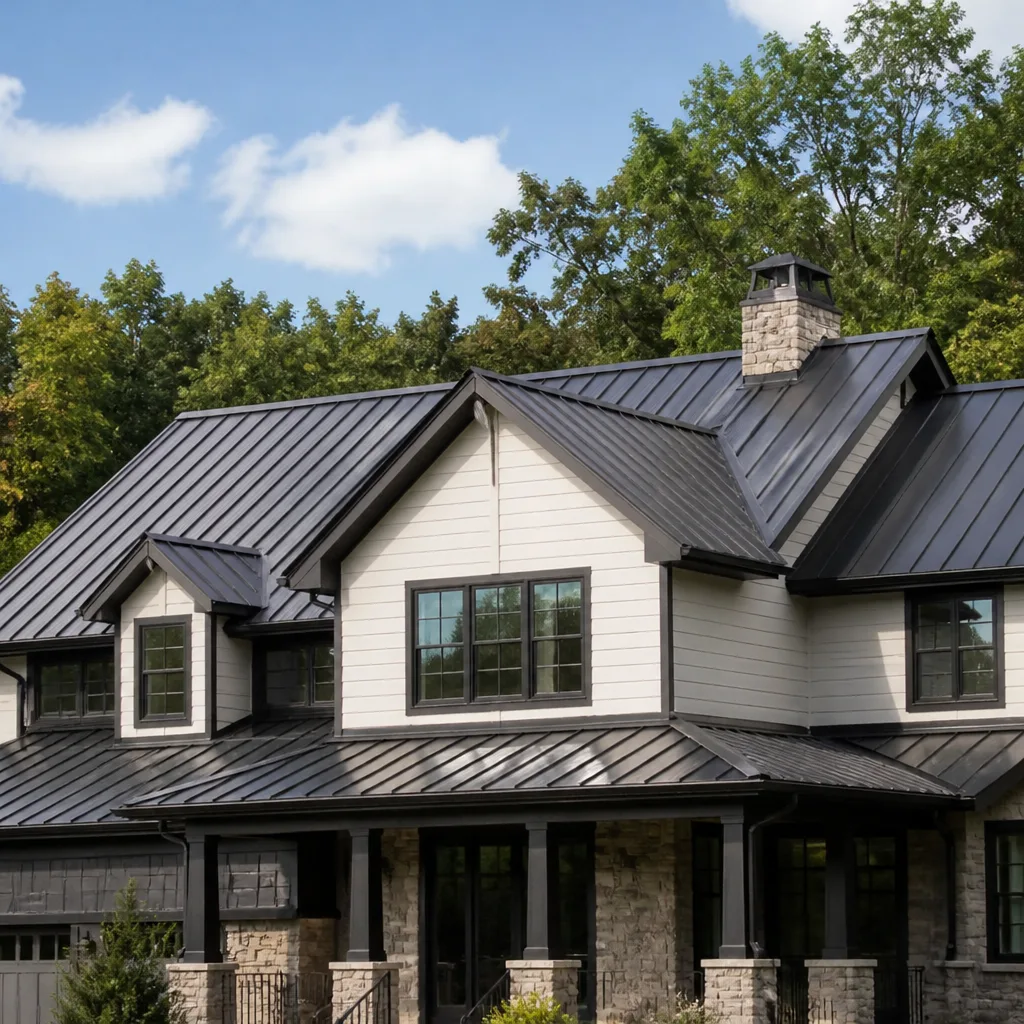 Metal roofing
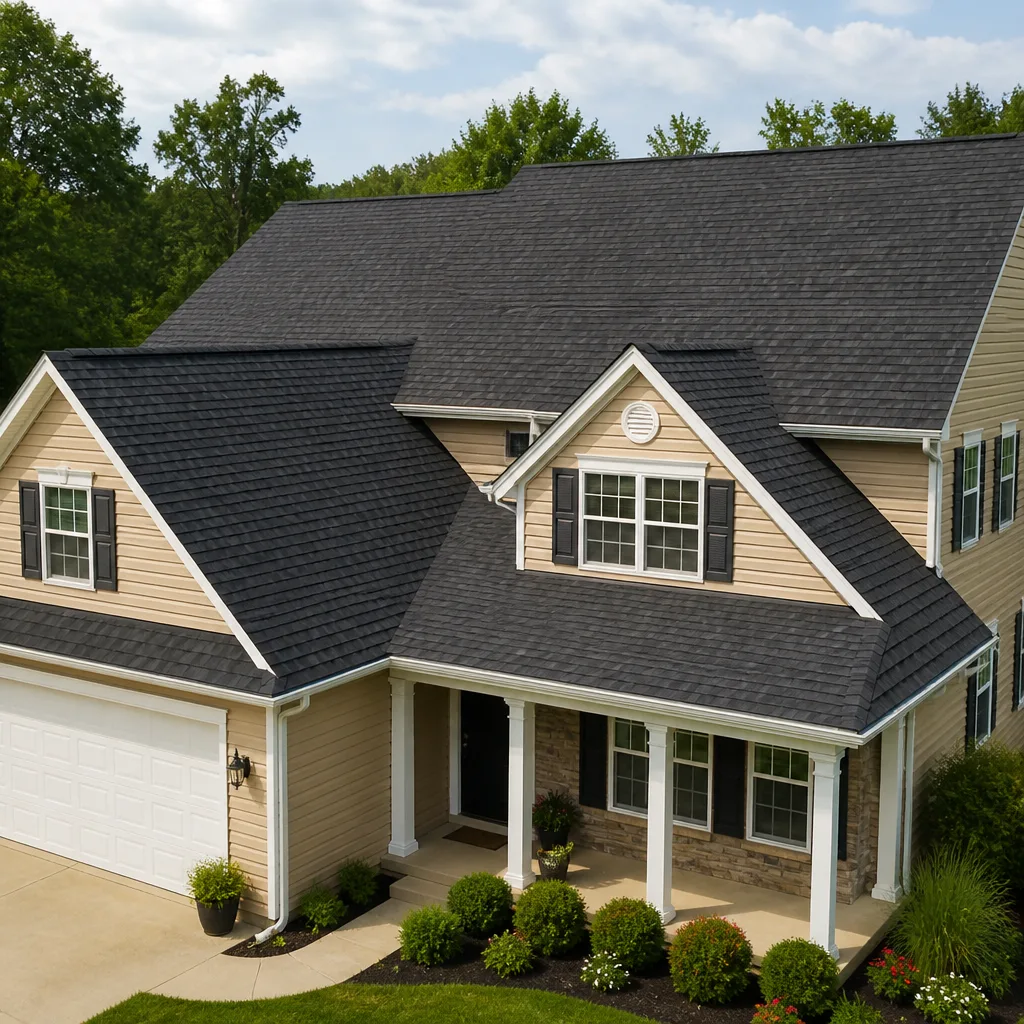 Architectural shingles
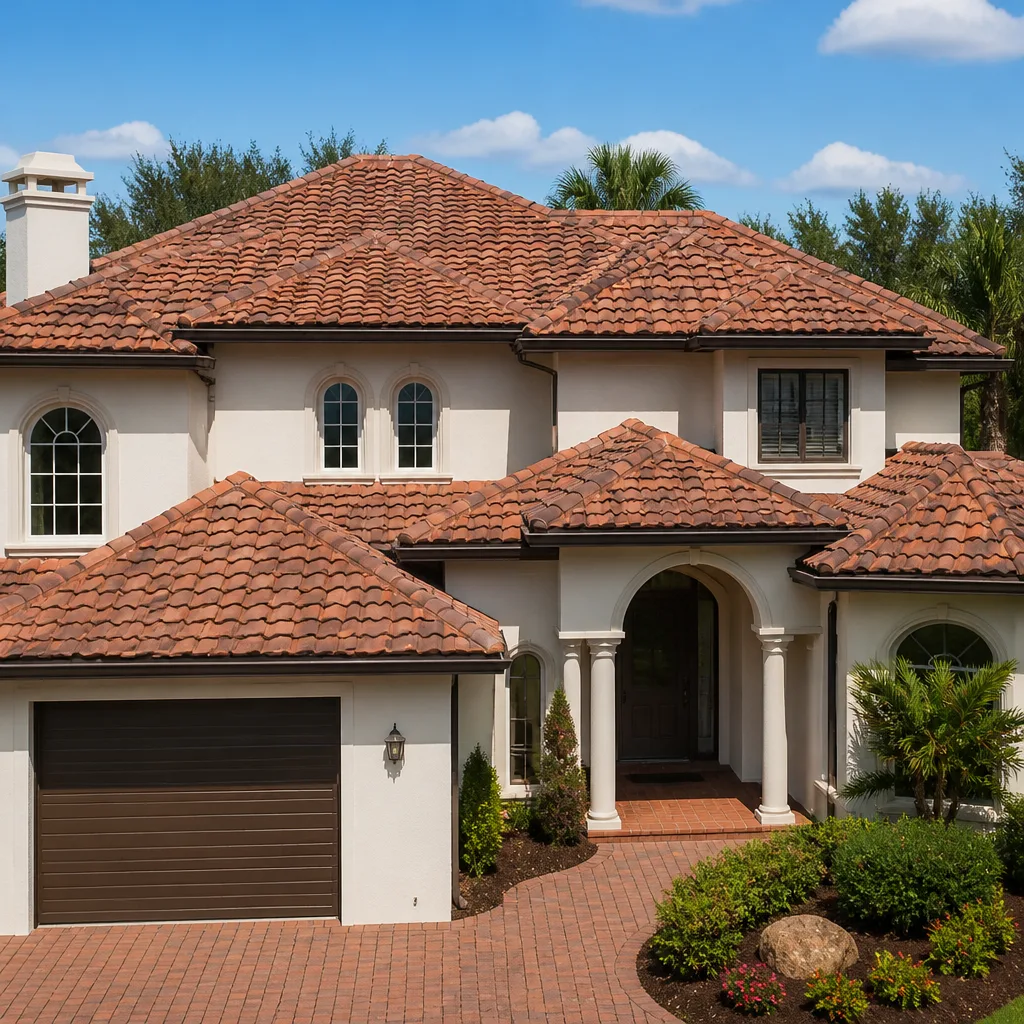 Tile roofing
 GAF
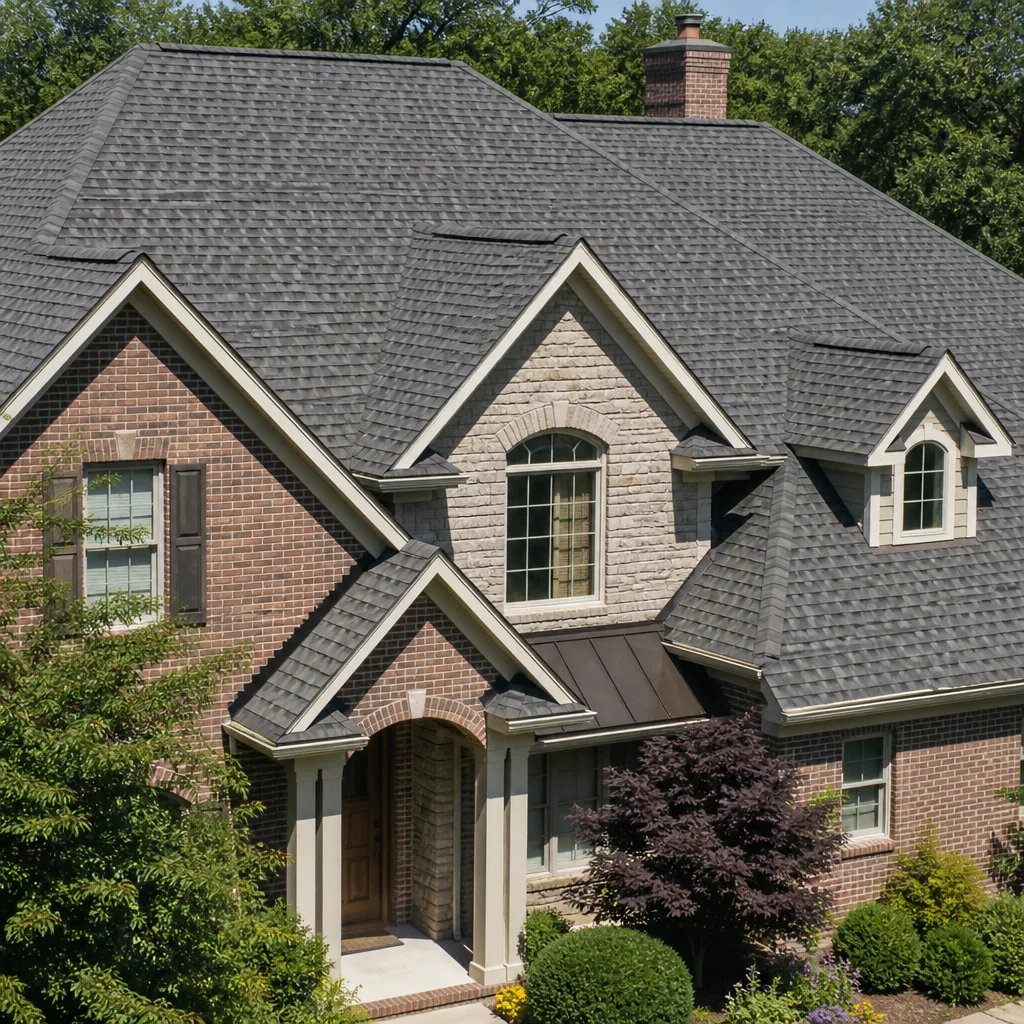 Owens Corning
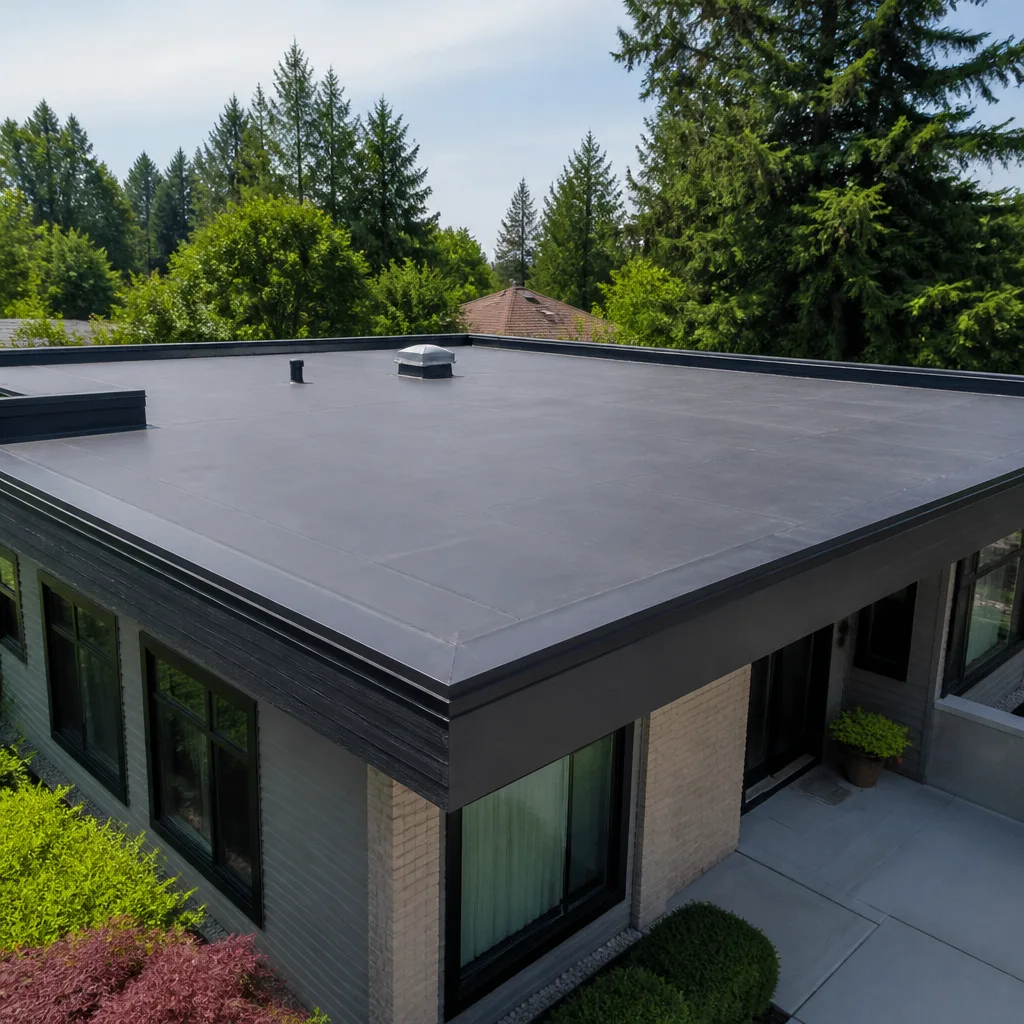 Flat & low-slope
Free roof inspection with deck photos before we talk money - GAF and Owens Corning certified installation
Roofing Cost Breakdown: The Winchester Homeowner’s Reference for 2026
Two roofing quotes for the same Winchester house can land $4,000 apart and both be honest. That gap almost never comes from one contractor being greedy. It comes from the two bids describing different jobs. One includes decking repair allowance, ridge and intake ventilation, drip edge, and a permit. The other is shingles plus labor, with the expensive unknowns left silent. Homeowners who don’t know which line items to look for end up paying for the missing scope later, usually at the worst possible moment. This guide breaks a Winchester roof into its actual components, gives you 2026 cost ranges for each, and shows you how to compare bids line by line so you’re pricing the same job twice.
Quick Answer
Roof replacement in Winchester, NV typically runs $9,500 to $28,000 for a standard single-family home in 2026, with most asphalt shingle jobs landing between $12,000 and $19,000. Roof repair generally falls between $350 and $1,800 depending on the leak source and how much decking is soft. The single biggest variable isn’t the shingle brand, it’s whether the quote includes decking repair, ventilation, flashing, and permits, which can swing a bid by $3,000 to $6,000 on their own.
Styles & brands we work with
- Architectural shingles
- Metal roofing
- Tile roofing
- GAF
- Owens Corning
- Flat & low-slope
Table of Contents
- Line-Item Cost Breakdown for a Winchester Roof
- Shingle Tiers: 3-Tab, Architectural, and Impact-Resistant
- Underlayment and Why the Desert Changes the Math
- How Pitch and Access Affect Winchester Labor Costs
- Manufacturer Warranty Tiers: Entry-Level vs. Full-System
- Decking Replacement and Winchester’s 1970-2000 Housing Stock
- How to Spot a Lowball Bid vs. a Legitimately Competitive One
- Comparing Bids on Equal Terms: A Step-by-Step Method
Line-Item Cost Breakdown for a Winchester Roof
A roof isn’t one product, it’s a stack of them, and each line has its own price range in the Clark County market. When you get a quote that says “remove and replace roof: $14,500,” you have no way to compare it to the next bid. Ask for the breakdown below and the picture gets clear fast.
These are typical 2026 ranges for an average Winchester home in the 1,800 to 2,500 square foot range, roughly 22 to 30 squares of roof area. Your actual numbers depend on pitch, access, and how much damage the tear-off reveals.
| Line Item | Typical 2026 Range (Winchester, NV) | Notes |
|---|---|---|
| Tear-off and disposal | $1,200 – $2,800 | Includes dumpster and landfill fees; two layers costs more |
| 3-tab shingles (material) | $1,800 – $2,600 | Entry tier, shorter lifespan |
| Architectural shingles (material) | $3,200 – $5,200 | The standard replacement choice |
| Impact-resistant shingles (material) | $4,800 – $7,500 | Heavier, thicker, longer warranty |
| Underlayment | $1,400 – $3,200 | Synthetic or felt; desert UV drives this choice |
| Labor (installation) | $3,500 – $7,500 | Pitch and access are the biggest movers |
| Flashing (valley, step, chimney) | $400 – $1,600 | Often omitted from cheap quotes |
| Drip edge and starter strip | $350 – $900 | Frequently dropped to lower the headline price |
| Ventilation (ridge, intake, or both) | $600 – $2,200 | Critical in a desert attic |
| Decking repair allowance | $0 – $4,000 | Contingency line; some bids hide this |
| Permit fees (Clark County) | $250 – $700 | Varies with valuation and scope |
Add those up on the low end and you’re near $13,000. On the high end you’re past $33,000. That spread is exactly why two Winchester bids can differ by thousands and both be legitimate. The job isn’t the same job until the line items match.
One thing we tell every homeowner who calls us for roof repair: ask for the breakdown before you ask for the total. A contractor who can’t itemize is either guessing or padding, and either way you’re the one carrying the risk. We work with seven leading shingle brands, so the recommendation on your quote line is driven by your roof and your budget, not by which dealer gave us a spiff.
Shingle Tiers: 3-Tab, Architectural, and Impact-Resistant
Shingle choice is the most visible cost decision on a Winchester roof, and it’s also the one most homeowners get pushed on. Here’s what each tier actually buys you in a desert climate.
3-Tab Shingles
The entry tier. Flat, uniform, cheapest by the square. They work, but the thinner mat and lighter granule coating tend to age faster under intense UV. On a Winchester roof that takes full afternoon sun, a 3-tab installation is a shorter-horizon decision. Good for a rental, a tight budget, or a roof you plan to replace again before you sell.
Architectural Shingles
The middle tier and the one most homeowners pick. Heavier mat, deeper shadow lines, and a longer manufacturer warranty window than 3-tab. Whether you’re looking at GAF Timberline or a CertainTeed Landmark series, the jump in material cost over 3-tab is usually $1,400 to $2,600 on a typical Winchester home, and the lifespan difference is meaningful. This is where the value curve sits for most houses.
Impact-Resistant Shingles
Thicker, heavier, and rated to resist impact damage in a way standard shingles aren’t. Hail isn’t a common problem in this part of Nevada, so the case for impact-resistant here is less about hail than about wind, debris, and general toughness over a long service life. They cost $1,600 to $2,300 more in material than architectural on an average roof. Worth it if you plan to stay long-term or your insurer offers a credit tied to impact-rated product (ask your carrier directly; we won’t guess at rates).
- 3-tab: lowest upfront, shortest lifespan, best for budget or short-hold scenarios
- Architectural: the default choice for most Winchester replacements
- Impact-resistant: heaviest, longest warranty, worth the upgrade for long-term ownership
The brand question matters less than the tier question. We install Tamko Heritage, GAF Timberline, CertainTeed Landmark, Owens Corning Duration, IKO, Atlas, and Boral products, and we’ll tell you plainly when a budget line is the right call and when it isn’t. A brand name doesn’t fix a tier mismatch.
Underlayment and Why the Desert Changes the Math
Underlayment is the layer under the shingles and it’s the line most homeowners never ask about, which is a problem. In Winchester the sun does a number on roofs, and underlayment is doing quiet work every day of the year, not just during rain.
Two main choices show up on Winchester quotes in 2026:
- Felt (organic or fiberglass): $1,400 – $2,000 for a typical roof. Cheaper, traditional, and it works. Felt tends to dry out and become brittle under sustained high heat, so it’s a shorter-life product in this climate.
- Synthetic underlayment: $2,000 – $3,200. More tear-resistant, doesn’t absorb moisture the way felt can, and holds up better to the heat cycling that a desert roof experiences day in and day out.
Some premium installations go to a self-adhering membrane at the eaves and in valleys for extra protection where water concentrates. That adds cost but pays off at the spots most likely to leak first.
Here’s the trap. A lowball bid that switches to the cheapest felt on the market and skips the ice-and-water-style membrane at the edges is quoting a roof that will perform differently than a bid using synthetic. The shingles on top might look identical in both quotes. The layer underneath is where the real lifespan difference lives, and it’s the first thing to disappear when a contractor is squeezing a price. Ask what underlayment is specified, by name. If the answer is vague, that’s your answer.
If your current roof is already leaking, the underlayment question is moot until the leak is stopped. That’s a roof repair conversation first, and we’ll tell you honestly whether a spot fix buys you a few years or whether the underlayment is already gone across the whole plane.
How Pitch and Access Affect Winchester Labor Costs
Labor is where Winchester quotes diverge the most, and the reason is usually geometry, not dishonesty. Two houses on the same street with the same square footage can carry very different labor numbers because of pitch and access.
Low-slope and flat sections
Flat or very low-slope roof areas can’t take standard shingles the same way a pitched roof can. They need a different assembly, and the labor to install it correctly is priced separately. On a Winchester home with a flat section over a patio cover or an addition, that portion of the quote should appear as its own line, not folded into the shingle total.
Steep pitch
Anything steeper than what a crew can walk comfortably adds time, fall protection, and staging. A steep-pitch section can push labor up 20 to 40 percent on its own. The trade-off is that steep roofs shed water and debris fast, so they often need less repair over their life. The cost is upfront, not ongoing.
Spanish tile and heavy materials
Tile roofs are a different animal. Lifting, sorting, and re-laying tile is slow, breakage during tear-off is real, and the underlayment underneath is usually the actual failure point on an older tile roof in Winchester, not the tile itself. A tile roof job is priced on underlayment replacement plus tile handling, and that number runs well above an asphalt job for the same footprint.
Access
Where the roof sits relative to the street matters. Narrow side yards, blocked driveways, steep lots, and second-story runs all add staging time. On a tight Winchester lot, a crew may need to hand-carry materials instead of using a conveyor, and that shows up in the labor line whether it’s itemized or buried.
Ask your contractor to explain the labor line in plain terms. “It’s a two-story with a steep back slope” is a real answer. “That’s just what labor costs” is not. We measure pitch and access before we quote because guessing here is how a bid comes back with a change order later.
Manufacturer Warranty Tiers: Entry-Level vs. Full-System
Warranty language on a roof quote is where a lot of homeowners tune out, and that’s exactly when they miss a meaningful cost decision. The difference between an entry-level manufacturer warranty and a full-system extended warranty usually shows up as $600 to $1,500 on a Winchester bid, and whether it’s worth it depends on how long you plan to own the house.
Entry-level warranty typically covers the shingles as a material only. If the shingles fail, you get replacement material, but not the labor to tear off and reinstall, and not the other components (underlayment, flashing, ventilation). Labor is where the real money is, so a material-only warranty covers the cheaper half of the problem.
Full-system extended warranty covers the whole roof assembly as a system: shingles, underlayment, and often the accessory components, with labor included, and typically a longer term. It usually requires the roof to be installed with the manufacturer’s full accessory lineup (their underlayment, their ventilation, their starter strip, their ridge cap) to qualify. That’s why the quote with the extended warranty also carries slightly higher component costs; the components have to match for the coverage to apply.
When the upgrade is worth it in a desert climate
Desert heat is the great accelerant. Underlayment that would last 20 years in a mild climate can be at the edge of its life sooner under sustained high temperatures and intense UV. If you plan to stay in your Winchester home more than 10 years, the full-system extended warranty covers the components most likely to fail first, and it’s a reasonable spend. If you’re moving in a few years, the entry-level warranty is adequate and the savings are real.
Either way, read the warranty exclusions before you sign. Most manufacturers exclude damage from things like foot traffic, improper installation, or non-matching components, and a quote that promises an extended warranty while installing mismatched components is promising something the manufacturer won’t honor. We’ll match components to the warranty tier on the quote so there’s no gap.
Decking Replacement and Winchester’s 1970-2000 Housing Stock
Decking is the biggest wildcard on any Winchester roof quote, and the reason goes back to when the houses were built. A large share of Winchester’s residential neighborhoods went up between 1970 and 2000. That era of construction used a lot of oriented strand board (OSB) as roof decking, and OSB does not tolerate moisture over long periods. When it gets wet and stays wet, it softens, delaminates, and eventually stops holding nails.
Here’s what that means in practice. On a re-roof, the crew tears off the old shingles and underlayment and inspects the deck. On many Winchester homes from that era, the crew finds soft spots around penetrations, at the eaves, in valleys, and anywhere a leak has been quietly working. Each sheet of decking that has to be replaced adds to the job.
Typical decking replacement costs (2026)
- Per sheet of OSB or plywood replaced: $75 – $160 per sheet installed, depending on material and thickness
- Typical Winchester re-roof, minor decking repair: $600 – $1,500 total
- Heavier decking replacement (larger affected area): $1,500 – $4,000
- Widespread decking failure (rare, usually on a roof with a long-standing leak): above $4,000
That range is why a contingency line for decking is the mark of an honest bid. A contractor who has torn off a lot of roofs built in this window knows there will be some decking damage behind the shingles on most of them. The difference between a contractor who quotes a $1,200 decking allowance and one who quotes zero is not that the second contractor found a perfect roof. It’s that the second contractor plans to charge you for the decking later, after the tear-off, when you have no leverage.
Our own technicians have up to 9 years of experience with this exact housing stock, and we build a realistic decking contingency into every replacement quote. If it doesn’t get used, you don’t pay for it. What you never want is a surprise change order on day two. For repair work, a soft deck under a leaking area usually gets found during the repair itself; we’ll show you before we touch anything.
If your current roof is leaking and you suspect decking damage, call us before it spreads. We answer 24/7. Fast dispatch from 7am to 7pm, Sunday through Friday.
How to Spot a Lowball Bid vs. a Legitimately Competitive One
A legitimately competitive bid is lower because the contractor has lower overhead, a better material price, or a tighter schedule. A lowball bid is lower because things are missing. The total on the page looks the same either way. The line items are what separate them.
When you’re comparing a Winchester roofing quote, scan for these specific items. If any are absent, the bid is incomplete, full stop.
- Decking allowance. If there is no line item (even a $0 contingency stated explicitly), the contractor is planning to bill it later as a change order. A bid with a realistic allowance is more trustworthy than one that pretends the deck will be perfect.
- Underlayment specified by name. “Felt or synthetic” is not a specification. A real bid names the product.
- Drip edge and starter strip. These disappear first from cheap quotes. They’re not optional. They protect the edges and the first course, and a roof installed without them is finished wrong.
- Ventilation. Ridge vent, intake vent, or both. A bid that installs a new roof over an old, unbalanced ventilation system is quoting a future problem. Hot attics in Winchester are their own cost.
- Flashing. Valley, step, and chimney flashing should be named. Reusing old flashing is a shortcut that leaks within a few seasons.
- Permit fees. A legitimate Clark County bid carries a permit line. A bid with no permit means the work isn’t being inspected, and that’s a resale problem for you even if nothing ever leaks.
- Warranty terms spelled out. “Fully warranted” is not a warranty. You should be able to read what’s covered, what’s excluded, and for how long.
If a bid is missing four or more of those, it’s not a deal, it’s a lower scope. Add the missing items back in and price them and you’ll usually find the “cheap” bid lands near or above the honest ones.
Comparing Bids on Equal Terms: A Step-by-Step Method
The single best thing you can do with three Winchester roofing quotes is normalize them. Strip them down to line items and compare like to like. Here’s how to do it in an afternoon.
- Request itemized quotes from every contractor. If a contractor won’t break it down, that’s a filter in itself. A quote should show tear-off, material tier, underlayment, accessories, ventilation, flashing, decking allowance, labor, and permit.
- Confirm the same shingle tier on all bids. A bid pricing 3-tab against a bid pricing architectural isn’t a fair comparison. Decide on your tier first, then compare.
- Confirm the same underlayment. Synthetic against felt is a different roof. Pick one and let every contractor price to it.
- Add the missing items back in. Where a bid omits drip edge, flashing, ventilation, or permit, add a realistic allowance and re-total. The gap between bids usually shrinks when you do.
- Compare the decking allowance line directly. One bid at $0 allowance and one at $1,500 is not a $1,500 difference in price, it’s a $1,500 difference in what’s covered.
- Read the warranty terms side by side. Note whether it’s material-only or full-system, the term, and what components must match.
- Ask each contractor to explain their labor line. Pitch, stories, access, and material weight should be reflected. A labor number that matches the neighbor’s house exactly, with no explanation of the difference, is a sign the quote wasn’t measured.
When we quote a Winchester roof, we line-item the scope so a homeowner can set it next to any other bid and see exactly where the difference sits. That’s the whole point of working across seven brands: the recommendation is driven by your home, not by which supplier gave us the best margin.
If you’re ready to see what your actual number looks like, roof replacement and repair estimates are free. Call (833) 390-2853.
Common Mistakes to Avoid
- Comparing totals instead of line items. Two bids $4,000 apart are usually two different scopes, not two different prices for the same work. Compare what’s included before you compare the bottom line.
- Accepting a bid with no decking allowance. On Winchester homes built between 1970 and 2000, some decking damage is the norm, not the exception. A zero allowance is a deferred charge order, not a bonus.
- Letting a contractor switch underlayment without telling you. The product under the shingles is where the lifespan lives. If it’s not named on the quote, ask for it in writing.
- Skipping the permit to save a few hundred dollars. Unpermitted roof work in Clark County becomes a disclosure problem at resale and can void parts of your manufacturer warranty. The permit is part of a proper quote.
- Choosing the cheapest shingle tier without asking about lifespan. 3-tab against architectural is a real decision, not a branding choice. Under desert UV the difference in service life is meaningful, and it’s worth asking for the comparison.
- Ignoring the attic ventilation line. A new roof over an unbalanced ventilation system traps heat and shortens the life of the whole assembly. It’s one of the cheaper lines on the quote and one of the more consequential.
- Reading “fully warranted” as a warranty. Ask for the terms in writing: what’s covered, what’s excluded, what components must match, and how long. A verbal warranty isn’t a warranty.
See the difference
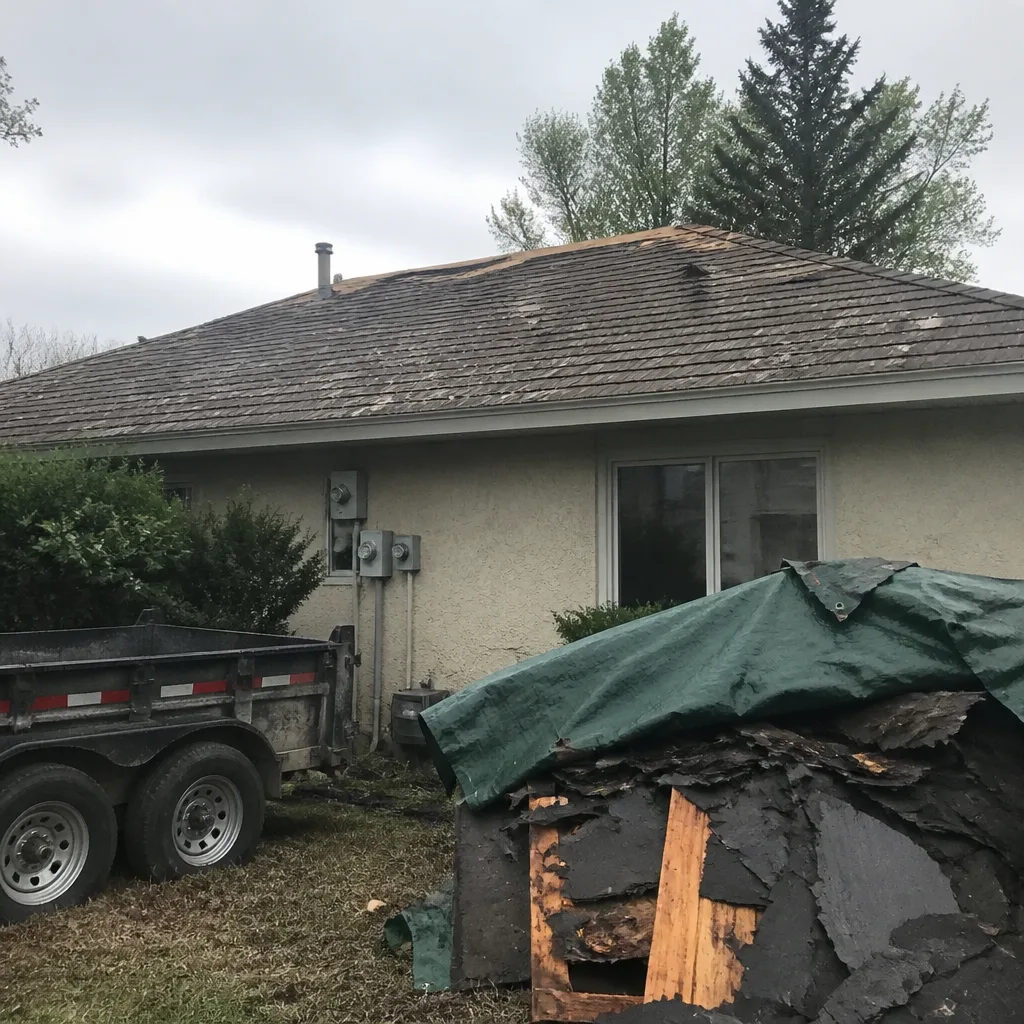 Before
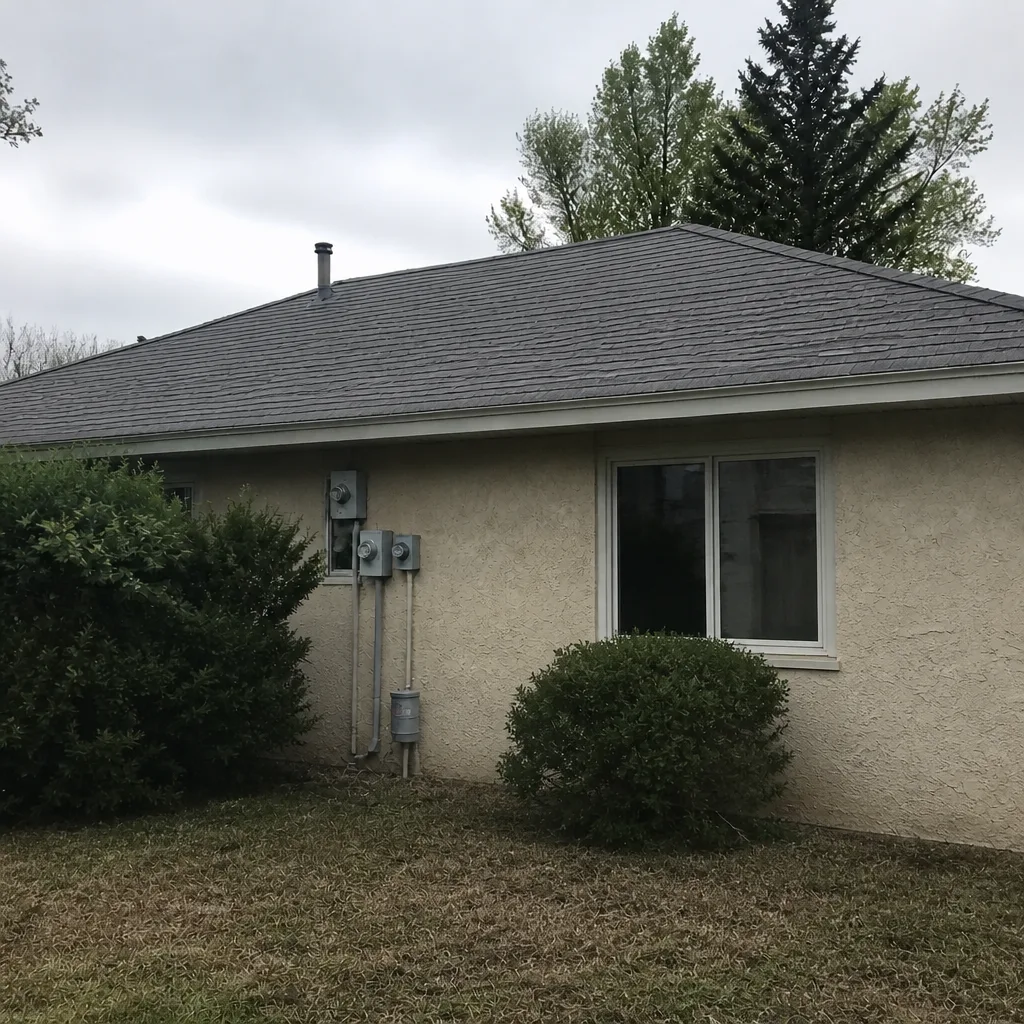 After
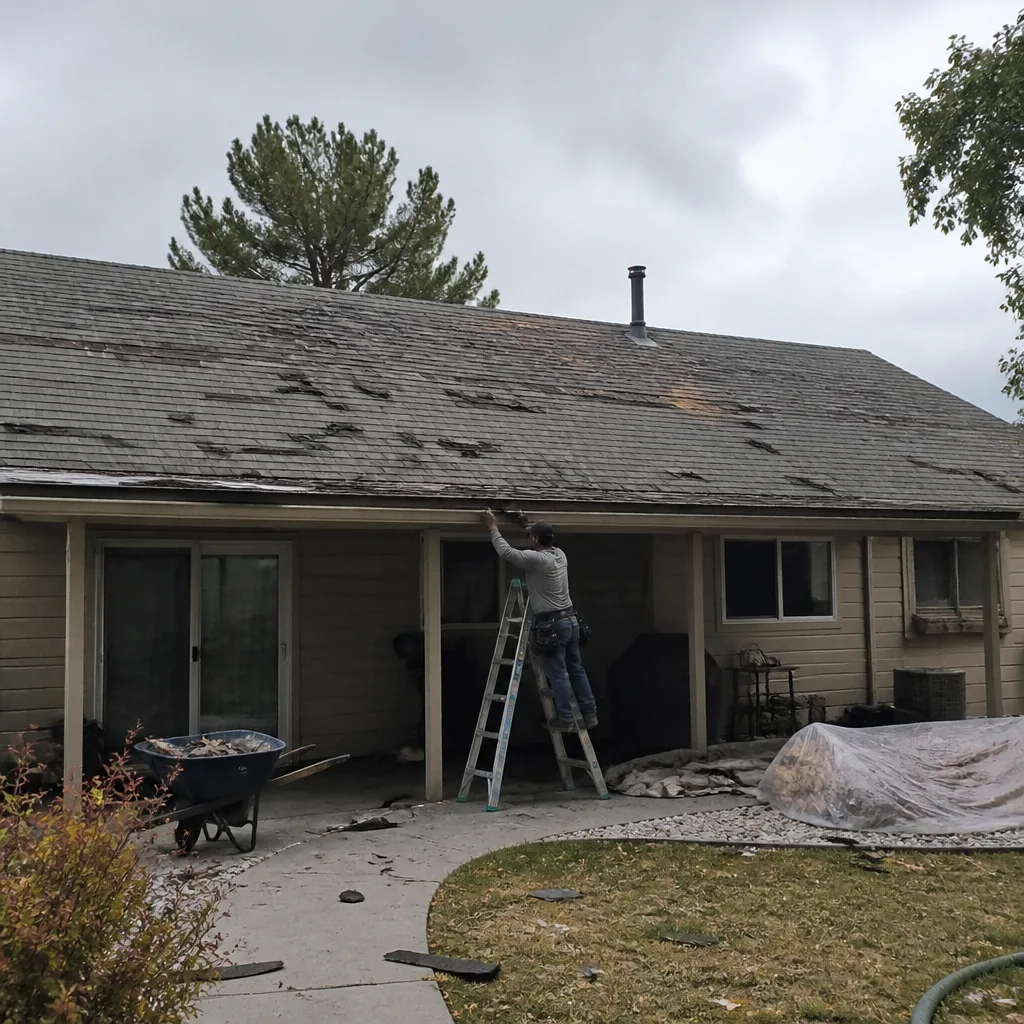 Before
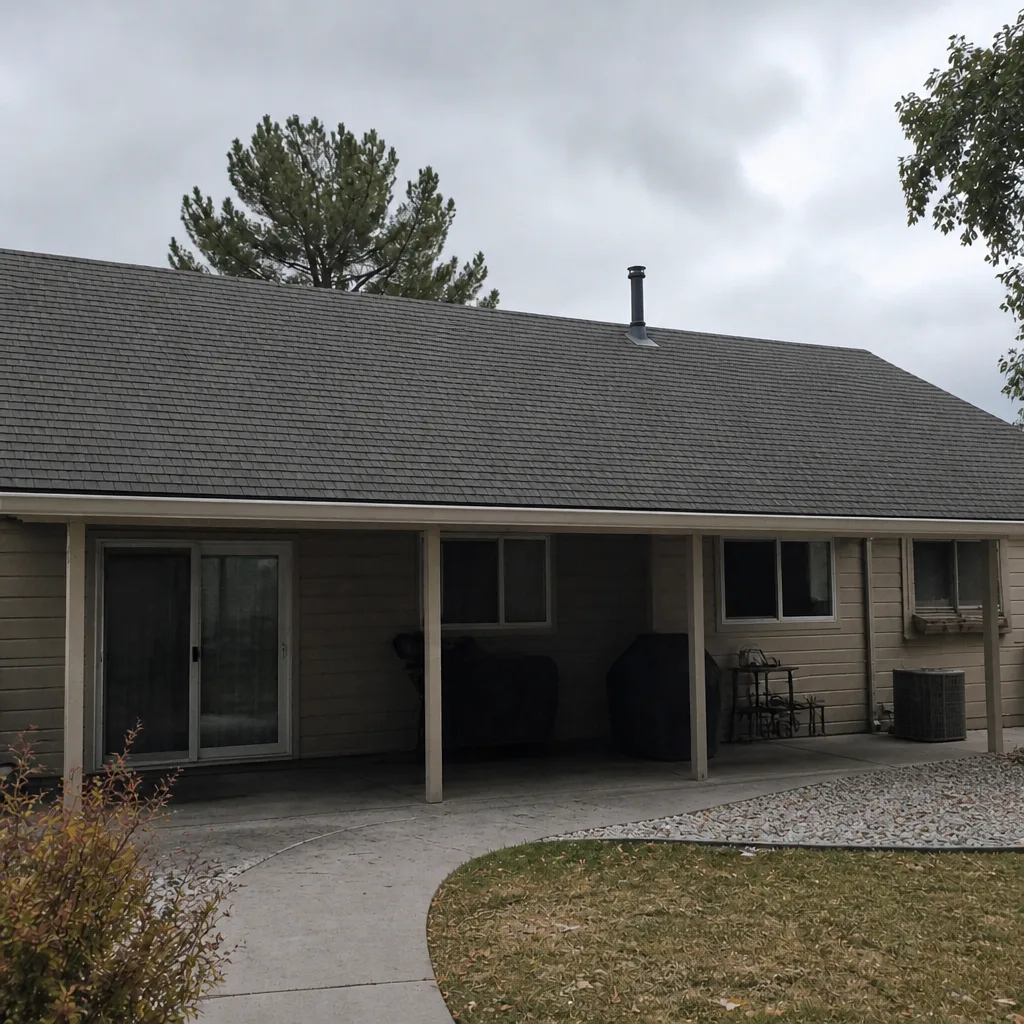 After
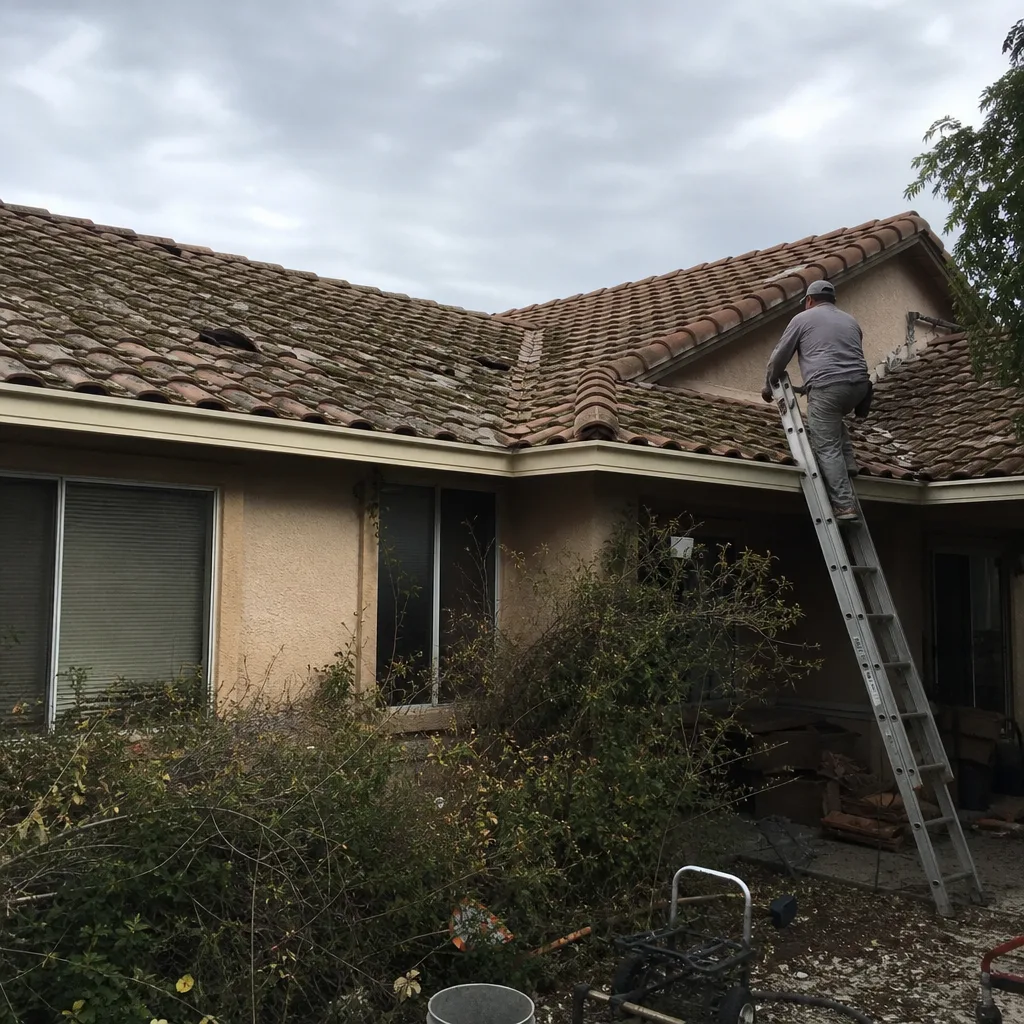 Before
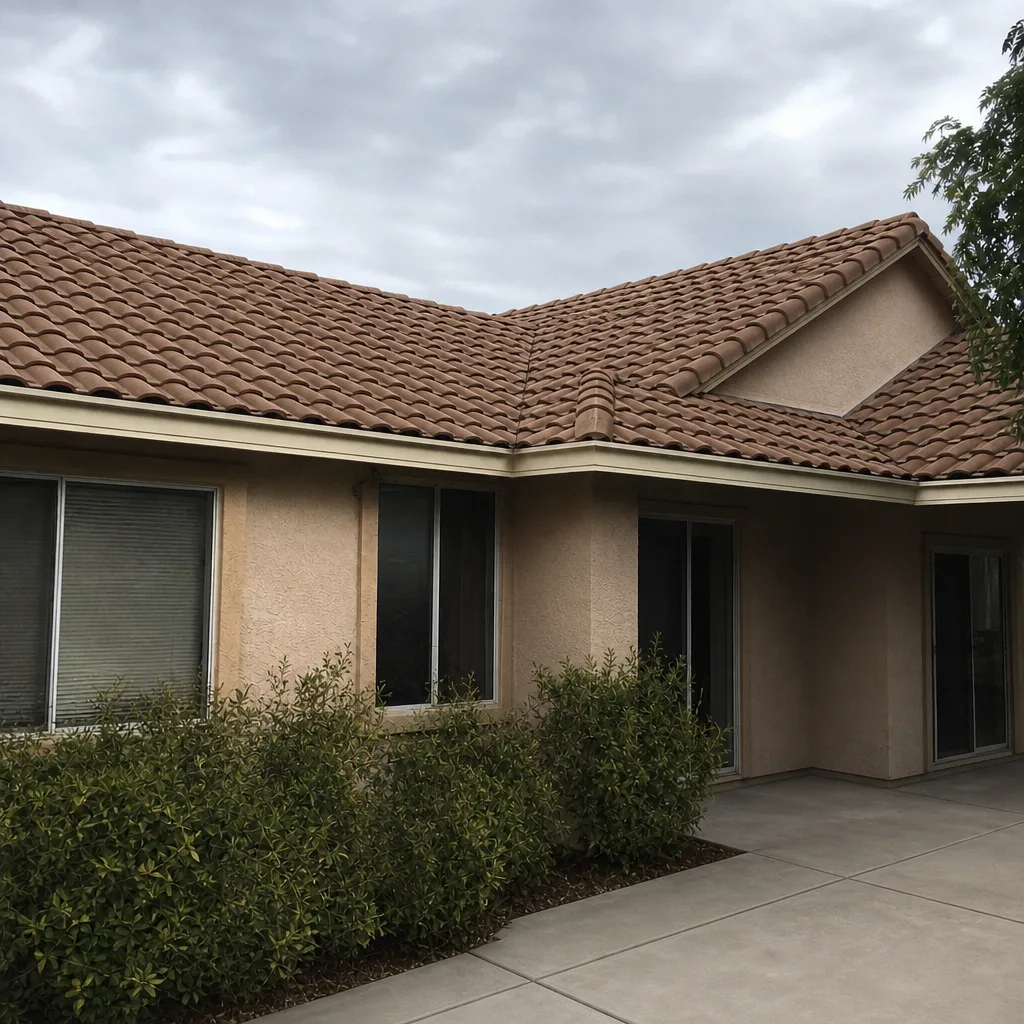 After
When to Call a Professional
Some roof issues are cosmetic. Others are signs the assembly is already failing behind the shingles. Call a professional when you notice any of these in and around your Winchester home: a water stain on a ceiling that keeps coming back after rain, missing or curling shingles on a slope you can see from the ground, granule buildup in the gutters (a sign of shingle aging), daylight visible in the attic, soft spots when you press on the deck from inside, or a section of roof that sags or feels spongy. Also call after any wind event that lifted or tore shingles, even if you don’t see a leak yet; the flashing underneath may be compromised without an obvious symptom. A dedicated roof inspection is the right first step, not a sales call. Roofer Winchester offers free estimates in Winchester. Call (833) 390-2853.
Roofing only. Done right. We handle repair, replacement, and inspection, and nothing else, which means every conversation is with people who spend their whole day on roofs. The Winchester neighborhood context matters here too: the roof on a 1985 tract home and the roof on a newer build fail in different ways, and knowing which one you’re looking at is half the job.
Frequently Asked Questions
Most Winchester roof replacements run between $12,000 and $19,000 for a typical single-family home, with the full range from $9,500 to $28,000 depending on shingle tier, pitch, decking condition, and access. Decking repair, ventilation, and permit lines are often the difference between two bids on the same house. Call (833) 390-2853 for an exact quote on your roof; estimates are free.
Almost always a scope difference, not a pricing difference. One quote includes decking allowance, ventilation, flashings, drip edge, and permit; the other quotes shingles and labor only. Ask for itemized quotes on all bids and normalize the line items before comparing totals. Call (833) 390-2853 if you want a second itemized quote to compare against.
Most cities require a permit for a full roof replacement, and in Clark County the permit fee typically lands in the $250 to $700 range depending on valuation and scope. Confirm the specifics with the county or city building department for your address. A proper quote should include the permit line. Call (833) 390-2853 to talk through the permit requirement for your job.
Typical roof repair in Winchester runs $350 to $1,800 in 2026, depending on where the leak is and how much decking is affected. A flashing repair is at the low end; a repair that uncovers soft decking pushes toward the high end. Call (833) 390-2853 for an exact repair quote; estimates are free.
On a well-built quote, the only line that moves is the decking allowance, and it should be clearly stated on the bid so you know the rule before work starts. Everything else is fixed by the written estimate. Reputable contractors itemize that allowance so there are no surprises. Call (833) 390-2853 and we’ll walk you through exactly what’s fixed and what’s contingency on your quote.
Usually yes if you’re staying in the home more than 10 years, because it covers the components most likely to fail first in sustained heat, including underlayment and labor. If you’re moving in the next few years, the entry-level material warranty is typically enough. The two quotes on your desk can differ by $600 to $1,500 here. Call (833) 390-2853 to talk through which tier fits your situation.
The Bottom Line
The roofing quotes on your desk aren’t lying to you. They’re answering different questions. When you compare them line by line, the $4,000 gap usually falls to a few hundred dollars, and the rest of it was scope all along. The things that matter most on a Winchester roof in 2026: the decking allowance (because of the 1970 to 2000 housing stock), the underlayment specified by name, the ventilation and flashing lines that cheap bids drop, the permit, and the warranty terms. Get those itemized, and the comparison gets honest. We work across seven leading shingle brands, Tamko and GAF among them, so the recommendation follows your roof and budget. Call (833) 390-2853 for a free, itemized estimate on your Winchester roof. We answer 24/7, with fast dispatch from 7am to 7pm, Sunday through Friday.
Written by the team at Roofer Winchester.